Sanford's arrowhead
Sagittaria sanfordii
Description
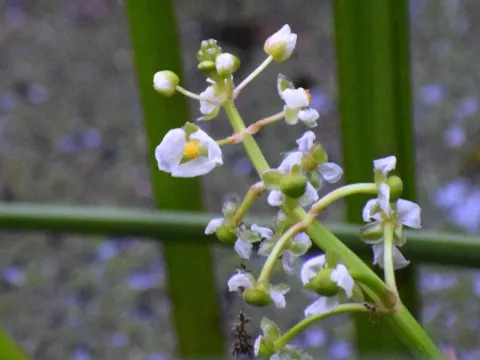
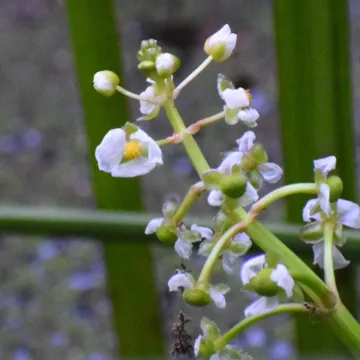
Sanford's arrowhead (Sagittaria sanfordii) is a perennial aquatic plant belonging to the Alismataceae family. As a specialized hydrophyte, it is uniquely adapted to thrive in wetland environments, playing a critical role in the natural balance of its native habitats.
The plant is endemic to California, USA, historically distributed across the Sacramento and San Joaquin Valleys. It favors shallow, calm waters such as marshes, ponds, and slow-moving streams. Due to significant land-use changes and the degradation of wetlands, the species is currently recognized as rare and is subject to conservation efforts in its natural range.
Botanically, Sagittaria sanfordii is characterized by its distinct sagittate (arrow-shaped) leaves and submerged foliage. Its root system consists of firm rhizomes that anchor the plant into silt-heavy substrates. The species utilizes both sexual reproduction via seeds and asexual reproduction through rhizomatous spreading, which helps in establishing robust local populations.
Cultivation of this species requires precise environmental control. It thrives in nutrient-rich silt or mud with a stable water level, generally keeping the depth within 0.5 to 1 meter. It demands full sun exposure for optimal growth. Agricultural management involves maintaining water quality, preventing the encroachment of invasive aquatic weeds, and ensuring that the substrate remains saturated without excessive turbidity.
The primary use of Sanford's arrowhead is in ecological restoration projects aimed at preserving biodiversity in wetland areas. It acts as an effective natural biofilter, improving water clarity and providing shelter for aquatic fauna. Common health issues include rhizome rot caused by stagnant conditions, as well as herbivory from waterfowl and aquatic insects, which can stress the plant during its active growing season.
Photo gallery