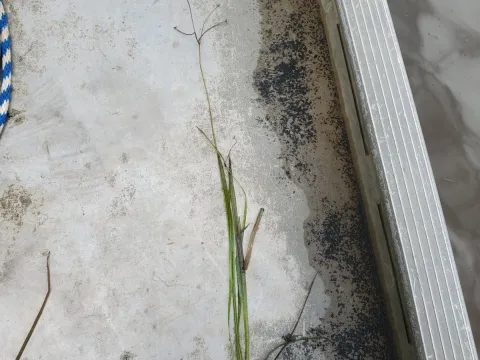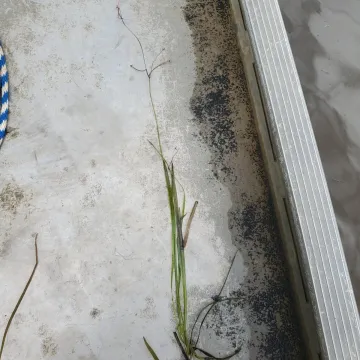
Narrow-leaf arrowhead
Sagittaria subulata
Description
Narrow-leaf arrowhead (Sagittaria subulata) is a perennial aquatic herbaceous plant belonging to the Alismataceae family. It is widely recognized in the horticultural industry as a versatile aquarium plant, valued for its ability to form lush, carpet-like submerged landscapes in freshwater environments.
Originating from North and South America, the species thrives in diverse habitats including shallow rivers, coastal marshes, and estuaries. This broad natural range is a result of the plant's remarkable tolerance to varying environmental conditions, including differences in salinity, which is a rare trait among common aquarium species.
Botanically, the plant is characterized by its linear, subulate leaves that emerge from a basal rosette. These leaves vary significantly in size depending on the light intensity and water depth. Its primary method of propagation is the production of stolons, which allow the plant to colonize available substrate spaces efficiently.
For successful cultivation, Sagittaria subulata requires consistent lighting and a nutrient-rich substrate to support its active root system. While it is adaptable to a range of temperatures, the ideal growth conditions are typically found between 20°C and 26°C. Supplemental CO2 injection can significantly improve its growth rate and leaf structural integrity.
While not a traditional food crop, its utility lies in aquatic landscaping and ecosystem maintenance. Typical challenges in cultivation involve competition with invasive algae species. Common signs of poor health include leaf yellowing or stunted growth, often caused by nutrient deficiencies or insufficient illumination levels in the deeper layers of the water column.
Photo gallery