Fragile glasswort
Salicornia fragilis
Description
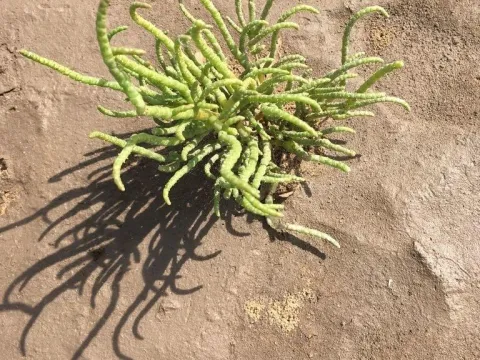
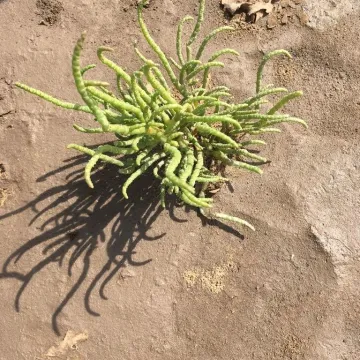
Fragile glasswort (Salicornia fragilis) is an annual succulent plant belonging to the Amaranthaceae family. It is a highly specialized halophyte, an organism naturally evolved to thrive in environments with extreme salt concentrations, making it a unique candidate for agriculture in soil conditions that are toxic to standard commercial crops.
The plant originates from coastal salt marshes and inland saline areas of Europe. Its distribution is closely tied to saline substrates, and today, it is increasingly viewed as a key solution for sustainable agriculture, particularly in regions suffering from secondary salinization, offering a way to revitalize unused, degraded land.
Botanically, Salicornia fragilis is characterized by succulent, segmented stems that are leafless and highly efficient at storing water and sequestering salts. The plant's anatomy is specifically adapted to manage high osmotic stress, which is essential for survival in its hypersaline natural habitats.
Cultivation requires strict adherence to specific agricultural practices: unlike traditional crops, this plant requires high concentrations of sodium chloride to reach its maximum productivity and nutritional quality. Proper water management is essential; the soil must be consistently moist with saline water, especially during the germination phase to ensure a successful crop stand.
- Requires full sun exposure for development.
- Growth rate is temperature-dependent, optimal at 20-28°C.
- Susceptible to waterlogging if drainage is insufficient.
- Essential minerals must be accessible in the growing medium.
The economic value of this crop is multifaceted. Often marketed as "sea asparagus," it is highly prized in culinary arts for its crunchy texture and salty, mineral-rich flavor. Furthermore, it has significant potential in bioenergy production, chemical manufacturing, and as a protein-rich forage supplement for livestock, contributing to a circular economy in saline-affected areas.
The crop is relatively resilient but can be affected by specialized insect pests that target succulent vegetation. Diseases in Salicornia fragilis are generally associated with poor soil aeration and water management. Maintaining adequate soil salinity prevents many opportunistic fungal pathogens, as high salt levels act as a natural inhibitor for many common plant disease agents.
Photo gallery