Hybrid Willow
Salix blanda
Description
Hybrid Willow (Salix blanda) is a deciduous tree belonging to the Salicaceae family. It is a well-known hybrid resulting from the crossing of Salix babylonica and Salix fragilis. This ornamental species is highly prized in landscape design for its classic weeping appearance and its ability to add a dramatic vertical element to any garden or park setting.
The culture has its origins in European botanical breeding programs, designed to combine the elegant aesthetic of weeping willows with the superior cold hardiness of brittle willows. It has a broad distribution across temperate regions, where it thrives in diverse climates. Its adaptability has made it a favored choice for arborists and gardeners looking for reliable, fast-growing ornamental trees.
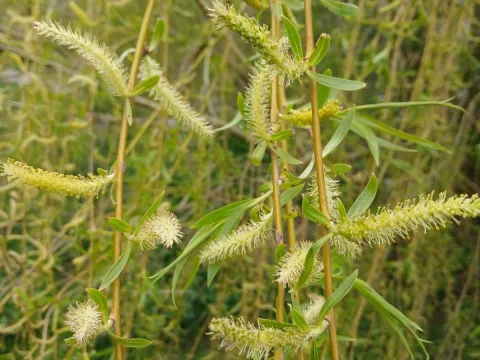
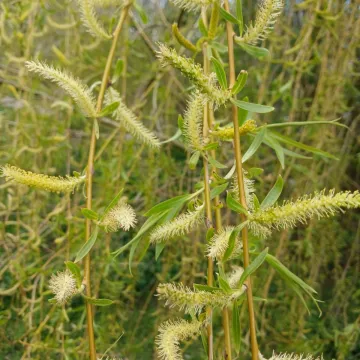
Botanically, Salix blanda is characterized by long, slender, pendulous branches that reach towards the ground, creating a graceful, rounded crown. The leaves are narrow and lanceolate, displaying a vibrant green color that turns golden in the autumn. As a fast-growing species, it can quickly establish itself in suitable environments, often reaching maturity within a decade, provided it has ample space to spread its roots and branches.
The agronomic requirements for this willow center on its preference for moist, nutrient-rich soils and full sunlight. While it is tolerant of various soil types, it performs best in well-drained loams. Agrotechnical management involves regular deep watering, especially during the establishment phase or dry spells, and mulching to prevent soil compaction. Structural pruning is recommended in early spring to maintain its distinct form and ensure plant health.
- Ornamental use: waterfront landscaping and focal points.
- Environmental role: soil stabilization and windbreaks.
- Maintenance: seasonal pruning and pest monitoring.
- Growth habit: rapid vertical and lateral development.
Regarding health management, the tree can be susceptible to common willow pests such as aphids, scale insects, and willow leaf beetles. Fungal diseases, particularly powdery mildew and leaf rust, may occur if air circulation within the canopy is restricted. Proper spacing between trees and avoiding overhead irrigation can significantly mitigate these risks, ensuring the long-term vitality of the plantation.
Photo gallery