Purple willow
Salix helix
Description
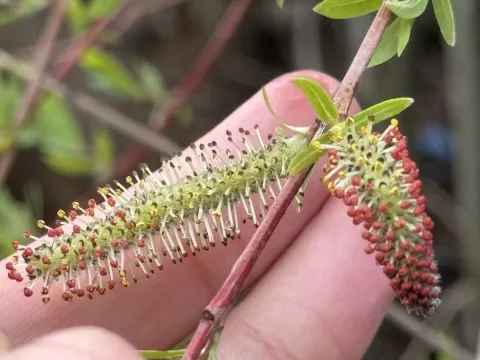
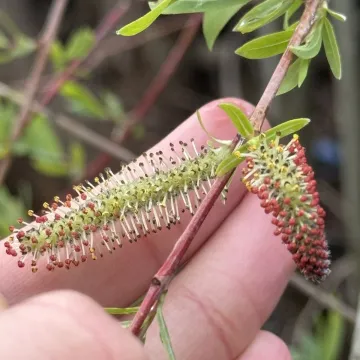
The purple willow (Latin: Salix purpurea), often referred to in historical botanical records alongside the synonymous form Salix helix, is a deciduous shrub belonging to the Salicaceae family. It is a highly valued agricultural crop, primarily grown for its slender, flexible, and durable stems, which are harvested for industrial use.
Native to Europe, North Africa, and Central Asia, the purple willow has been successfully introduced to various temperate regions worldwide. In its natural habitat, it thrives in floodplains, along riverbanks, and in marshy areas, demonstrating a significant ability to stabilize soil and prevent water-induced erosion.
Botanically, the plant presents as a multi-stemmed shrub reaching heights of 3 to 5 meters. Its young shoots exhibit a distinct purple or olive-purple color, which gives the plant its common name. The leaves are typically narrow, lance-shaped, and display an opposite arrangement, distinguishing this species from many other common willow varieties.
Cultivation requirements include rich, moisture-retentive soils and full exposure to sunlight. The purple willow is intolerant of shade and prefers well-drained but consistently moist substrates. Agronomic practices focus on intensive biennial or annual harvesting of stems, which encourages the development of strong, straight shoots, essential for commercial basketry or biomass production.
Economically, this willow species is vital for the handicraft sector, providing high-quality rods for basketry and woven furniture. In modern agricultural systems, it is increasingly utilized in short-rotation forestry to produce renewable energy through biomass. Furthermore, it plays a key role in ecological restoration projects, specifically for soil phytoremediation and stream bank reinforcement.
- Excellent winter hardiness.
- Adaptability to various soil types.
- Rapid biomass accumulation rate.
- High aesthetic and ecological value.
The main challenges in cultivating this crop are fungal diseases, such as leaf rust and anthracnose, which are favored by high humidity and poor air circulation. Common pests include the willow leaf beetle and various types of aphids. Integrated pest management, including proper spacing and sanitation, is crucial for maintaining the health and longevity of willow plantations.
Photo gallery