Violet willow
Salix oxica
Description
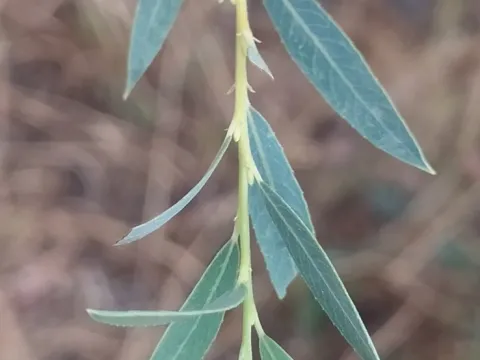
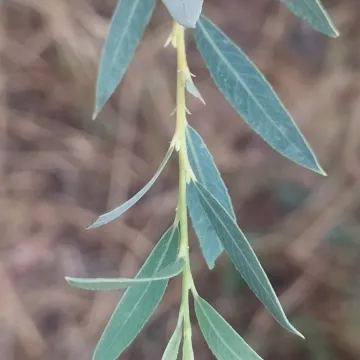
Violet willow (Salix oxica), often referred to as red willow or osier, is a prominent member of the Salicaceae family. It is a fast-growing deciduous shrub known for its slender, flexible branches that exhibit a distinct glaucous or waxy bloom, which gives them a violet or reddish appearance.
The native range of this species extends across the temperate zones of Eurasia, where it is commonly found in river floodplains, wet meadows, and sandy dunes. Its evolutionary adaptation allows it to thrive in nutrient-poor, sandy soils, where it performs the crucial ecological function of stabilizing terrain and preventing wind and water erosion.
Botanically, Salix oxica is characterized by its long, lanceolate leaves and early spring flowering. The catkins emerge before the leaves, providing an essential early-season pollen source for pollinators. The plant is highly resilient and capable of regenerating from cuttings, which makes it a preferred species for both ecological restoration and agricultural cultivation.
To successfully cultivate violet willow, one should select sites with adequate moisture, although it is quite adaptable to different soil types. Propagation is typically achieved through hardwood cuttings planted in early spring. Maintenance involves regular pruning, which is essential for stimulating the production of high-quality, straight, and flexible shoots suitable for commercial use.
The economic and industrial applications of this culture are diverse:
- Production of willow rods for professional basketry and furniture making.
- Environmental engineering, specifically for stabilizing sandy riverbanks and coastal areas.
- Windbreak installation to protect agricultural fields from soil blowing.
- Use as a renewable biomass source for energy production.
As with other willow species, Salix oxica can be susceptible to pests such as the willow leaf beetle and aphids, as well as fungal pathogens like rust. Successful management relies on maintaining plant health through proper spacing and sanitation. Removing infected wood and ensuring good air circulation within the plantation significantly reduces the need for chemical intervention.
Photo gallery