Salsola paulsenii
Salsola paulsenii
Description
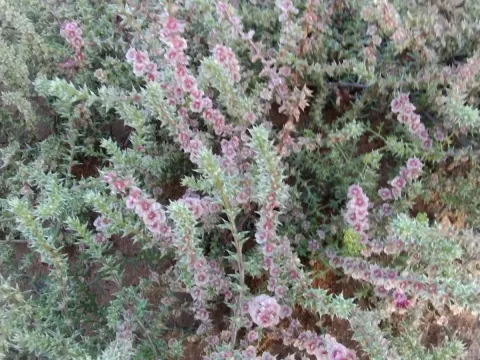
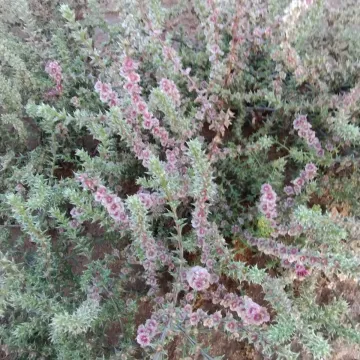
Salsola paulsenii is an annual herbaceous plant belonging to the Amaranthaceae family. It is a specialized halophyte, an organism capable of thriving in saline environments that would be toxic to most conventional agricultural crops. The plant typically grows as a branching shrub with succulent leaves, an adaptation that helps it manage osmotic stress and water retention in arid climates.
Originating from the deserts and semi-deserts of Central Asia, this species has evolved to withstand extreme temperature fluctuations and minimal precipitation. Its natural habitat includes saline flats, sandy soils, and degraded agricultural lands. Due to its robustness, it is frequently studied as a model for restoring ecological balance in areas suffering from soil salinization.
Botanically, Salsola paulsenii is characterized by a deep taproot system, which allows it to secure nutrients and limited moisture from deep soil layers. The leaves are typically linear and fleshy, often turning color as the season progresses. The plant produces small, inconspicuous flowers that eventually develop into winged fruits, facilitating seed dispersal through wind, a strategy known as the tumbleweed mechanism.
Cultivation practices for this species are relatively simple, as it is highly adapted to low-input farming. The primary requirements include full sun exposure and well-drained, albeit saline, soils. Sowing is typically carried out in early spring to take advantage of seasonal soil moisture. It requires no chemical fertilization and is generally resistant to the diseases that plague most commercial field crops.
The economic utility of Salsola paulsenii is primarily found in rangeland management and land reclamation. As a forage crop, it provides essential nutrition for camels and small ruminants during the winter season when other vegetation is scarce. Beyond animal feed, its role in phytoremediation is significant, as it stabilizes loose sand dunes and prevents wind erosion in desertified regions, gradually enhancing soil structure over time.
Photo gallery