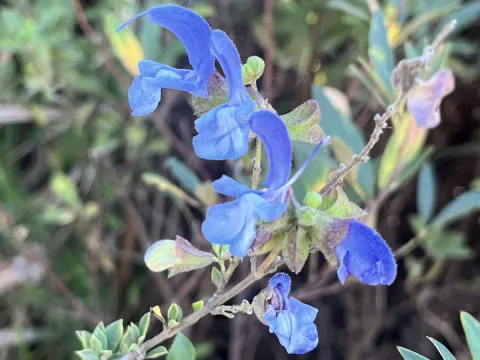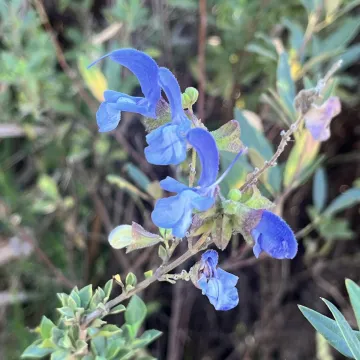
African sage
Salvia africana
Description
African sage (Salvia africana) is a perennial evergreen subshrub belonging to the Lamiaceae family. Renowned for its resilience and aromatic properties, it stands out as an important botanical specimen that integrates well into both ornamental and small-scale agricultural landscapes.
Originating from the southern regions of Africa, this species is naturally adapted to a Mediterranean-like climate. Its native range consists of areas with dry, warm summers and mild winters, which dictates the specific environmental requirements needed to successfully grow this plant in a cultivated setting.
Botanically, the plant is characterized by its distinct silvery-green foliage, which provides a protective layer against intense heat. It produces striking flowers that range in color, typically attracting various pollinators. The shrub structure is woody at the base and requires careful pruning to maintain health and aesthetic appeal.
Agricultural requirements focus on well-draining soil and ample sunlight exposure. Being highly drought-tolerant, Salvia africana thrives in sandy or rocky soils where moisture does not linger. In agricultural production, irrigation should be carefully managed to avoid root zone saturation, which is the primary cause of decline.
The host of applications for this plant includes ornamental landscaping for water-wise gardening and potential utilization in the fragrance and essential oil industries. As a hardy plant, it serves as an excellent nectar source for bees and other beneficial insects, enhancing the biodiversity of the agricultural ecosystem.
- Requires full sun for optimal development.
- Prefers neutral to slightly alkaline soil pH.
- Susceptible to root rot if drainage is insufficient.
- Can be propagated via stem cuttings in early spring.
Common pests and diseases include fungal infections like powdery mildew, particularly when airflow is restricted. Root pathogens are the most significant concern; therefore, maintaining proper spacing between plants and avoiding overhead irrigation are crucial prophylactic measures for long-term health.
Photo gallery