Greek sage
Salvia fruticosa
Description
Greek sage (Salvia fruticosa) is a perennial subshrub belonging to the Lamiaceae family. It is recognized as a significant agricultural crop valued primarily for its essential oils and secondary metabolites used in various industries ranging from cosmetics to pharmacology.
The plant is native to the Mediterranean region, typically found in dry, rocky areas. Due to its Mediterranean origins, it thrives in environments characterized by mild winters and hot, dry summers. It has been cultivated for centuries across southern Europe and the Middle East as a hardy, drought-tolerant perennial.
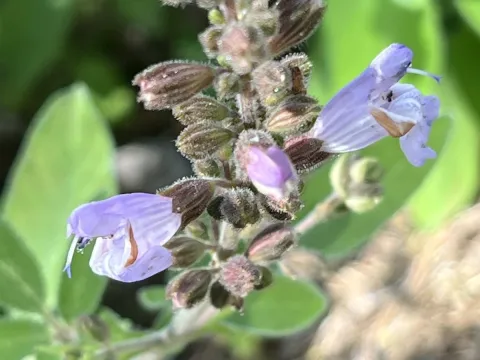
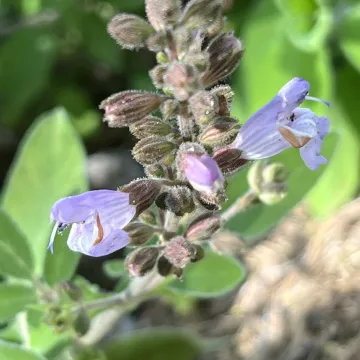
Botanically, the plant is characterized by its heavily branched stems and distinctive, velvety, gray-green leaves. It reaches a height of up to one meter and produces small, pale pink or lavender flowers in spikes. Its root system is deep and robust, allowing it to survive in nutrient-poor, rocky substrates.
Successful cultivation requires well-drained soil, as the plant is highly susceptible to root rot if water stagnation occurs. Ideally, the soil should have a neutral to alkaline pH level. Agronomic care focuses on ensuring maximum sunlight exposure and performing regular pruning to encourage dense growth and increase the leaf yield for harvest.
- High tolerance for solar radiation and drought.
- Avoidance of heavy, clay-based soils that retain too much moisture.
- Minimal fertilization needs compared to other field crops.
- Risk of fungal infections if air circulation is poor.
Economically, Greek sage is mainly cultivated for its essential oils, which are rich in compounds like thujone and cineole. Beyond oil production, the dried foliage is a staple in the herbal tea industry and acts as a culinary spice, while also serving as a key ingredient in traditional and modern medicinal formulations for its antioxidant properties.
Photo gallery