Roemer's Sage
Salvia roemeriana
Description
Roemer's Sage (Salvia roemeriana) is a charming herbaceous perennial plant belonging to the Lamiaceae family. It is distinct among the sage species for its remarkable ability to bloom vigorously in shaded environments, making it a highly desirable choice for woodland gardens and landscape designs that lack full sun exposure.
The native range of this species is centered in the southwestern United States, particularly Texas, and extends into northern Mexico. It typically inhabits rocky slopes and shaded forest floors, which dictates its preference for sites with filtered light. Due to its natural habitat, the plant is well-adapted to environments that offer some protection from intense afternoon heat.
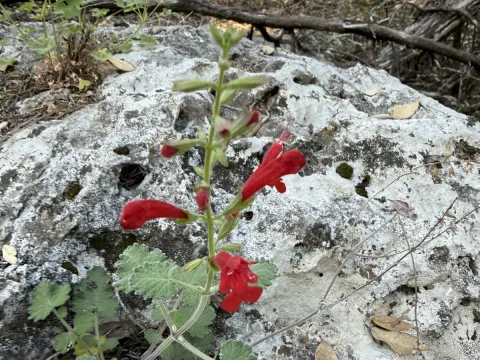
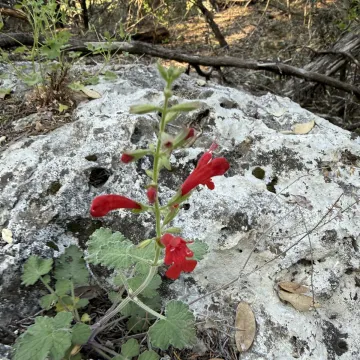
Botanically, Roemer's Sage features a low-growing basal rosette of vibrant green leaves with distinctly scalloped or toothed margins. The flowering stalks rise above the foliage, reaching heights of 8 to 16 inches. The plant is best known for its striking, tubular red flowers that appear in loose, airy clusters, serving as a magnet for hummingbirds and various pollinating insects.
Regarding cultivation, this species requires well-drained soil rich in organic matter. While it is tolerant of various soil types, poor drainage is a primary limiting factor that can quickly lead to root rot. Consistency in moisture is key: the soil should remain slightly moist but never waterlogged. Providing adequate mulching helps maintain soil temperature and moisture levels throughout the growing season.
In terms of practical use, Roemer's Sage is widely utilized in shade gardening, rock gardens, and naturalistic landscape plantings. It is generally resistant to major pests but can occasionally be bothered by aphids or spider mites in dry, stagnant air conditions. Proper spacing and good air circulation remain the most effective cultural controls against fungal diseases and pest infestations.
- Light: Partial shade or dappled sunlight.
- Water: Moderate, avoid waterlogging.
- Soil: Fertile, well-draining, slightly acidic.
- Uses: Borders, containers, woodland gardens.
Photo gallery