Wild clary
Salvia verbenaca
Description
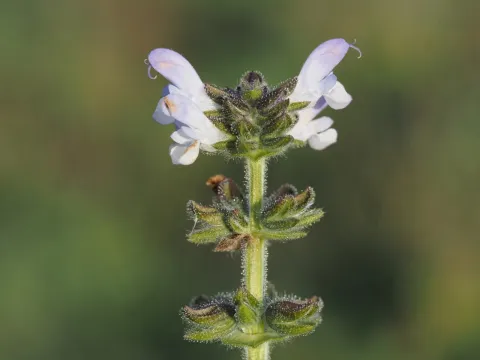
Wild clary (Salvia verbenaca) is a herbaceous perennial plant belonging to the Lamiaceae family. Native to the Mediterranean region and parts of Europe, this species is recognized for its hardiness and aromatic properties. In agricultural contexts, it is grown for its essential oils, medicinal potential, and as a beneficial forage crop in specific environments.
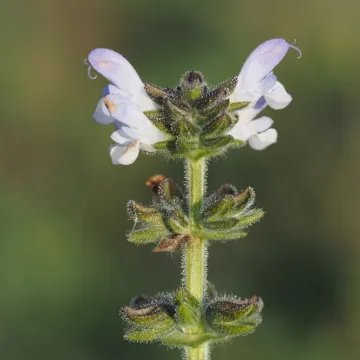
Botanically, the plant is characterized by a basal rosette of crinkled, deeply lobed leaves that resemble those of verbena. The flowering stems, reaching up to 60 cm, bear dense spikes of violet or blue-purple flowers. The plant possesses a robust taproot system, which serves as a biological mechanism for drought tolerance in arid climates.
The crop thrives in well-drained, calcareous, or sandy-loam soils with a neutral pH. It is a heliophilous plant, requiring full sun exposure for optimal growth and maximum oil content in the foliage. Unlike many other crops, it exhibits a high degree of adaptability to poor soil conditions but struggles in areas with excessive water accumulation, which can cause root rot.
Agronomic practices focus on surface sowing, as seeds require light to germinate effectively. Once established, the crop requires minimal intervention, though weeding is essential during the early stages of growth to prevent resource competition. Fertilization should be balanced, with a focus on potassium and phosphorus to enhance root strength and stress resistance.
Economic applications for Salvia verbenaca include:
- Extraction of essential oils for the fragrance and cosmetic industries.
- Production of botanical extracts for pharmaceutical applications.
- Support for biodiversity as a nectar-rich plant for honey bees.
- Use as a medicinal herb in traditional herbal practice for digestive health.
The plant is relatively resilient to pests, though it may occasionally be affected by aphids, spider mites, or lepidopteran larvae during the peak growing season. Common diseases include powdery mildew and damping-off, particularly in dense stands with high humidity. Maintaining proper row spacing and ensuring adequate soil drainage are the most effective management strategies for maintaining crop health.
Photo gallery