Siebold's elder
Sambucus sieboldiana
Description
Siebold's elder (lat. Sambucus sieboldiana) is a deciduous shrub or small tree belonging to the Adoxaceae family. Known for its elegant appearance and robust growth, this species is a distinct member of the elderberry genus, often appreciated by gardeners and botanists for its characteristic leaf structure and vibrant autumn fruits.
The native distribution of this plant includes parts of East Asia, specifically Japan, the Korean Peninsula, and the southern regions of Sakhalin and the Kuril Islands. It is naturally adapted to temperate maritime climates, thriving in areas with distinct seasonal changes. The plant prefers habitats that offer consistent moisture and moderate protection from extreme weather conditions.
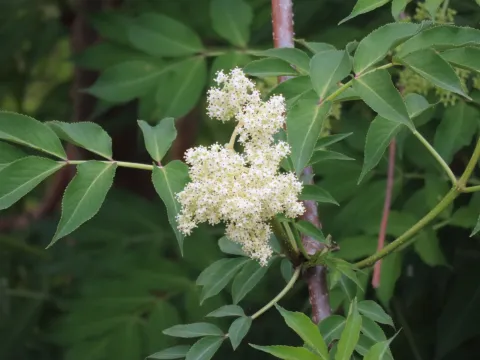
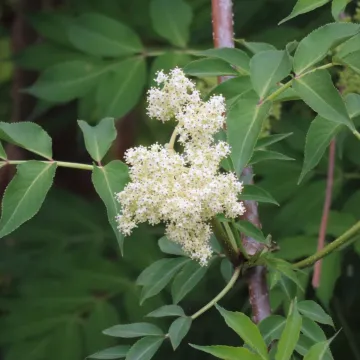
Botanically, Siebold's elder is characterized by large, pinnately compound leaves with serrated margins. Its inflorescences are dense, cone-shaped or paniculate, appearing in late spring or early summer. These flowers are typically white to cream, contrasting beautifully with the deep green foliage. The fruits are bright red drupes that ripen in late summer and autumn, providing a significant aesthetic appeal and ecological value.
To ensure optimal growth and health of the plant, the following agronomic practices are recommended:
- Soil Management: Plant in fertile, well-drained, and moisture-retentive soil.
- Sun Exposure: It performs well in full sun to partial shade, depending on the heat intensity of the region.
- Hydration: Regular watering is crucial during the plant's establishment phase and periods of drought.
- Maintenance: Pruning should be performed in early spring to remove dead wood and encourage denser growth.
In terms of agricultural and landscape utilization, Siebold's elder is primarily employed for ornamental purposes. It is highly effective in urban landscaping due to its resilience against pollution and its ability to act as a natural windbreak. Beyond its aesthetic qualities, the plant serves as a food source for local bird populations and contributes to soil stabilization, making it a functional choice for ecological garden designs.
Photo gallery