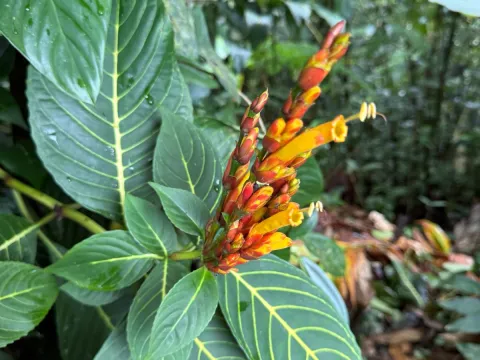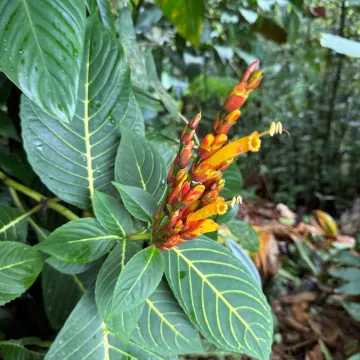
Sanchezia parvibracteata
Sanchezia parvibracteata
Description
Sanchezia parvibracteata is a distinctive evergreen shrub within the Acanthaceae family. Known for its lush foliage and striking appearance, it is a classic example of tropical vegetation that has gained popularity among interior decorators and conservatory enthusiasts worldwide for its vibrant, leaf-focused aesthetics.
The origin of this species traces back to the humid tropical rainforests of South America, primarily spanning regions in Ecuador and Peru. Within its natural habitat, it thrives in the shady understory, where it benefits from consistent humidity and filtered sunlight. This evolutionary adaptation dictates how the plant should be positioned when kept in a domestic or nursery environment.
Botanically, the plant is characterized by its square, sturdy stems and large, opposite leaves featuring prominent, often cream-colored, venation. The inflorescences are composed of bright yellow tubular flowers shielded by bracts, which are notably smaller than those of related species. Its root system is moderately aggressive and requires adequate space to maintain the plant's overall health and vitality.
Successful cultivation requires strict adherence to tropical environmental parameters. The plant demands a temperature range of 18–25°C and must be shielded from cold drafts or drying heat sources. The soil medium should be nutrient-rich and porous, ensuring moisture retention without waterlogging. Frequent monitoring of soil structure is essential, as the plant reacts negatively to compacted or water-saturated substrates.
- Watering: Maintain consistent soil moisture, reduce in winter.
- Humidity: Prefers high levels, regular misting recommended.
- Fertilization: Balanced NPK liquid feed during the growth phase.
- Propagation: Easily grown from softwood stem cuttings.
In terms of agricultural and horticultural utility, Sanchezia parvibracteata is used primarily as an ornamental focal point in gardens and indoor displays. While generally robust, it is susceptible to typical indoor pests like spider mites and scale insects. Maintaining high hygiene standards and proper spacing between plants helps to minimize the risks of infestation and ensures the plant remains a striking aesthetic feature.
Photo gallery