Bloodroot
Sanguinaria canadensis
Description
Bloodroot (Sanguinaria canadensis) is a perennial flowering plant belonging to the poppy family, Papaveraceae. It is the only member of the genus Sanguinaria. The plant is famous for its distinctive red rhizome sap, which was traditionally used by Native Americans as a dye and as a medicinal treatment for various ailments.
Native to the temperate regions of North America, this plant is commonly found in woodland environments. Its natural habitat includes rich, moist soils in deciduous forests. Because of its early spring emergence and unique foliage, it is widely utilized in shade gardens and naturalistic landscapes across North America and parts of Europe.
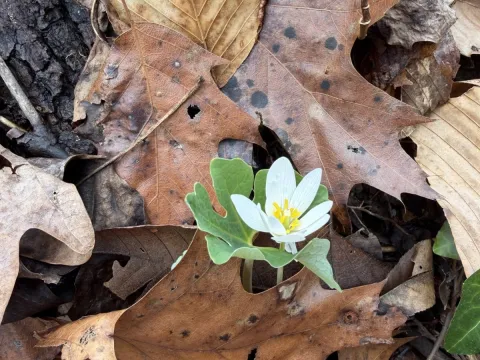
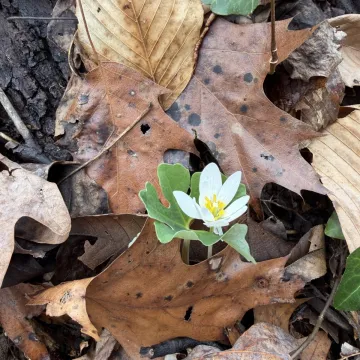
Botanically, Bloodroot grows from thick, creeping rhizomes. The leaves are basal, deeply lobed, and emerge wrapped around the flower bud. The flowers, which bloom early in the spring, are white with numerous petals. Each flower lasts only a few days, but the plant's structural beauty remains until the foliage dies back in the summer heat.
To cultivate Bloodroot successfully, you must replicate its woodland environment. Key requirements include:
- Rich, loose, well-draining soil high in organic matter.
- Partial to full shade during the growing season.
- Consistent soil moisture, especially during the spring bloom.
Regarding its utility, Bloodroot is mainly valued as a garden ornamental. In medicine, it contains sanguinarine, an alkaloid with potent antimicrobial properties, though it must be handled with care due to its potential toxicity. The plant is generally robust, but gardeners should watch for slugs and snails. Root rot can occur if the soil remains waterlogged for extended periods.
Photo gallery