Green lavender cotton
Santolina oblongifolia
Description
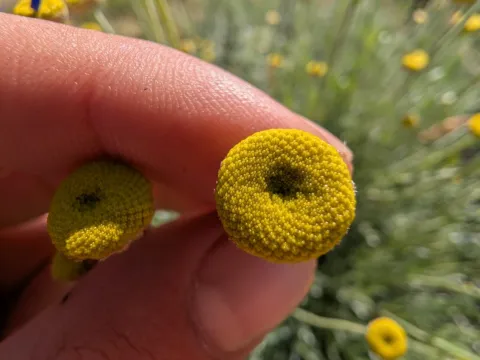
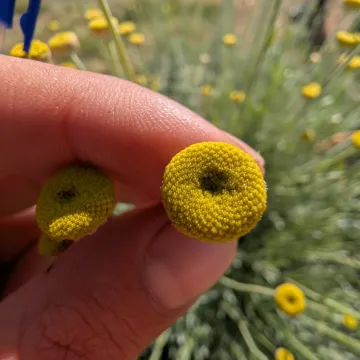
Santolina oblongifolia, commonly referred to as green lavender cotton, is an evergreen subshrub belonging to the Asteraceae family. This species is prized in horticulture for its dense growth habit, aromatic foliage, and distinctive yellow button-like flowers that appear during the summer season.
The plant originates from the Mediterranean basin, particularly from the Iberian Peninsula, where it thrives in arid, sunny, and well-drained environments. Due to its Mediterranean heritage, it is highly adapted to dry climates and requires full sunlight to maintain its structural integrity and health.
Botanically, the plant is characterized by its elongated, finely textured leaves that exhibit a silvery-green hue. The stems are woody at the base and become herbaceous toward the tips. The flowers are composite heads that bloom on upright stalks, adding a vibrant touch to the otherwise muted foliage color.
Agronomic requirements for Santolina oblongifolia include exceptionally well-drained soil, often performing best in poor, rocky, or sandy substrates. Over-fertilization or overly rich soil can lead to rapid, weak growth, which makes the plant more susceptible to environmental stress and fungal infections.
The primary use of this crop is in landscape design, where it is utilized for low-maintenance borders, rock gardens, and herb patches. Beyond its ornamental appeal, the aromatic essential oils present in the leaves provide mild repellent properties against some common garden pests, adding practical value to its aesthetic benefits.
- Sun exposure: Full sun is essential.
- Soil pH: Tolerates neutral to slightly alkaline conditions.
- Maintenance: Pruning required to prevent legginess.
- Watering: Drought tolerant once established.
- Common pests: Aphids and mites may occur in stressed plants.
Photo gallery