Sapium haematospermum
Sapium haematospermum
Description
Sapium haematospermum is an ornamental and ecologically significant tree species belonging to the Euphorbiaceae family. It is known for its elegant habit and distinctive biological traits, which have made it a subject of interest in both botanical research and landscape management in its native regions.
The species is native to South America, with a broad distribution spanning across Argentina, Paraguay, and parts of Uruguay. It naturally inhabits floodplains, riverbanks, and humid forests. This evolutionary adaptation to high-moisture environments makes it a vital component of riparian ecosystems, where it effectively controls soil erosion.
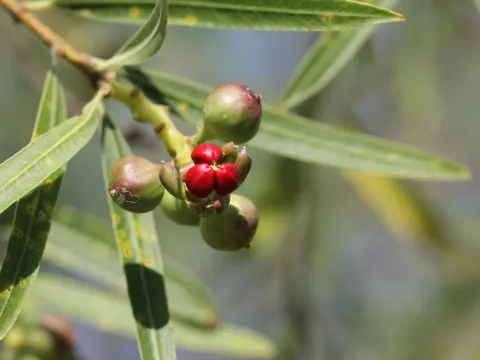
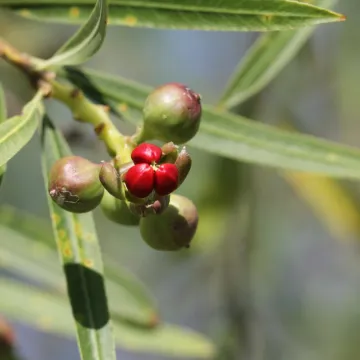
Botanically, the tree is characterized by its simple, lanceolate leaves and a milky latex sap, a hallmark of the spurge family. One of the most striking features is its autumn foliage, which turns brilliant shades of red, complemented by the plant's unique seed capsules that display vibrant red pigments upon maturity. These seeds are a key diagnostic feature for identifying the species.
Cultivation of Sapium haematospermum requires careful attention to moisture and light. It thrives in fertile, well-draining soils and demands consistent irrigation, especially during dry spells. In a garden or agroforestry setting, it prefers full sun exposure to maintain its shape and promote healthy foliage coloration. Proper spacing is essential to allow for adequate airflow and to reduce the risk of humidity-related pathogens.
Regarding health and maintenance, the tree is generally hardy but susceptible to common pests such as aphids and spider mites, which can be managed with standard horticultural practices. Pathogens related to soil-borne fungi are a concern if the drainage is poor. Economically, beyond its ornamental appeal, the wood is sometimes utilized for small-scale carpentry, and the plant remains a popular choice for restoration projects in its native habitat due to its rapid growth rate.
Photo gallery