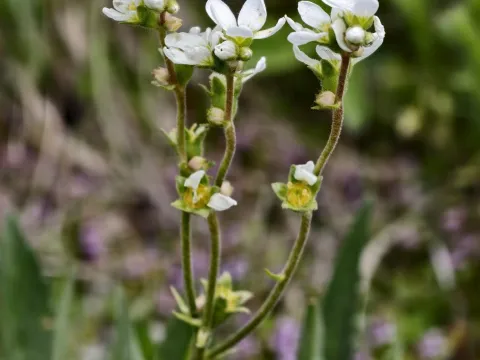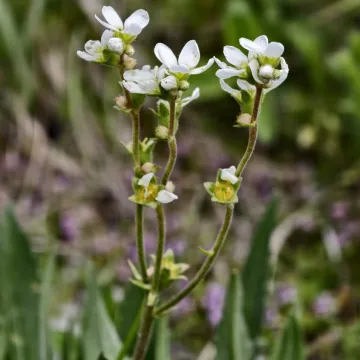
Bulbous saxifrage
Saxifraga bulbifera
Description
Bulbous saxifrage (lat. Saxifraga bulbifera) is a perennial herbaceous plant belonging to the Saxifragaceae family. The species is scientifically distinguished by its unique ability to produce small, bulb-like structures (bulbils) in the axils of its stem leaves, which act as primary units for vegetative propagation and ensure the plant's survival in harsh environmental conditions.
The native habitat of this plant includes mountain ranges and foothills of Southern and Central Europe. In modern horticulture, it is cultivated primarily for its aesthetic appeal, being perfectly suited for rock gardens, stone walls, and alpine troughs. Its ability to thrive in poor, rocky soils makes it a preferred choice for specialized landscape designs that mimic natural high-altitude environments.
Botanically, the plant features an erect stem reaching 20–40 cm in height, with alternate leaves and a characteristic basal rosette. The flowers are typically white, arranged in loose panicles, blooming during the transition from spring to early summer. The plant's architecture is optimized for low-resource environments, prioritizing energy storage in its bulbils during the growth season.
Cultivation requirements focus heavily on drainage. Saxifraga bulbifera thrives in well-aerated, gritty, or sandy soils with neutral to slightly alkaline pH levels. While it is hardy and can withstand temperature fluctuations typical of mountain climates, it is intolerant of waterlogged conditions. Proper irrigation management is essential to prevent physiological stress and root rot during periods of high humidity.
To ensure successful establishment and maintenance, growers should consider the following management practices:
- Selecting sites with full to partial sun exposure to prevent etiolation.
- Implementing a gravel layer or stone mulch to protect the stem base from moisture accumulation.
- Monitoring for aggressive weeds that may outcompete the young seedlings in spring.
- Applying minimal, slow-release fertilizers to avoid excessive succulent growth.
From a phytosanitary perspective, the main challenges involve fungal infections such as root and crown rots, which are commonly triggered by poor drainage. Pests such as spider mites can also be problematic, especially in sheltered or warm environments. Preventive strategies, including proper spacing and sanitation, are highly effective in maintaining the health and vigor of bulbous saxifrage throughout the growing season.
Photo gallery