Saxifraga burseriana
Saxifraga burseriana
Description
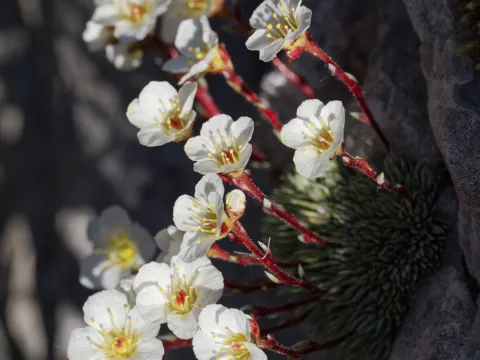
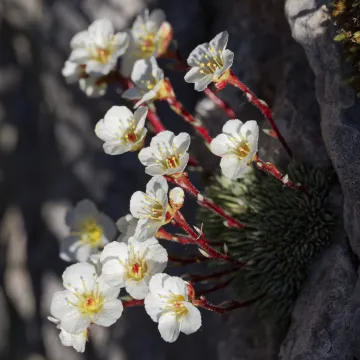
Saxifraga burseriana, commonly known as the Burser saxifrage, is a low-growing perennial plant belonging to the Saxifragaceae family. This species is highly prized for its cushion-forming growth habit, creating dense, moss-like mounds that produce striking, large white flowers during the early spring season.
Native to the limestone mountains of the Eastern Alps, the plant has evolved to thrive in harsh, high-altitude environments. Its natural habitat consists of rock crevices and stony slopes, where it has adapted to survive with minimal nutrition and limited soil depth. This history dictates its current requirements for cultivation in modern gardens.
Botanically, Saxifraga burseriana is characterized by its small, stiff, lime-encrusted leaves organized into compact rosettes. These rosettes gradually merge to form firm, spherical mats. The flowers, often solitary and relatively large compared to the foliage, are typically held on short stalks, adding significant aesthetic value to the garden during the transition from winter to spring.
The agronomic success of this crop relies on mimicking its natural alpine environment. It demands:
- Full sun to partial shade exposure.
- Well-draining, gritty, limestone-rich soil.
- Protection from excessive winter moisture and humidity.
- Regular inspection for rot at the base of the rosettes.
The primary horticultural use of this plant is in rock gardens, scree beds, and trough gardening. It is generally resistant to many common pests, though it may be susceptible to aphids or spider mites under poor ventilation conditions. Preventing root and crown rot remains the most critical aspect of the maintenance routine to ensure long-term health and growth.
Photo gallery