Drooping saxifrage
Saxifraga cernua
Description
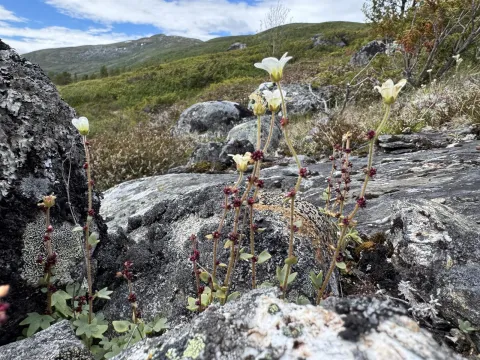
Drooping saxifrage (Latin Saxifraga cernua) is a perennial herbaceous plant belonging to the Saxifragaceae family. It is a highly specialized species adapted to the harsh environmental conditions of the Arctic and mountainous regions.
The plant originates from the circumpolar regions of the Northern Hemisphere, inhabiting areas across Eurasia and North America. It is typically found in moist tundra soils, rocky screes, and alpine meadows, where it thrives in short growing seasons and cold temperatures.
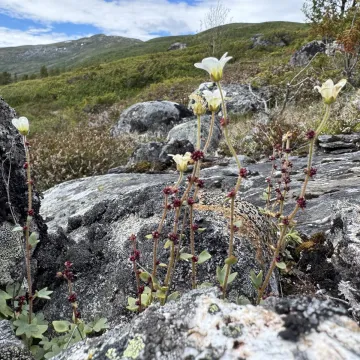
Botanically, it is defined by its distinctive bulbils located in leaf axils, which serve as its primary means of vegetative propagation. The stems reach a modest height of 5–20 cm, ending in a single white, nodding flower. The basal leaves are kidney-shaped and slightly lobed, designed to maximize photosynthesis in low-light Arctic conditions.
Cultivation requirements focus on replicating cold, moist, and well-drained conditions. It is essential to use a gritty, nutrient-poor substrate that mimics natural scree slopes. The plant is rarely grown as a commercial crop but serves as a significant subject for specialized alpine gardening and botanical research regarding climate change impacts.
Like many mountain species, it can be susceptible to root rot if drainage is insufficient, especially in warmer climates. Pests such as aphids or spider mites can pose a threat if the plant is kept under stressful conditions. Proper care requires stable moisture levels and protection from intense, direct heat during the peak of the summer season.
Photo gallery