Saxifraga cuneata
Saxifraga cuneata
Description
Saxifraga cuneata is a perennial herb belonging to the Saxifragaceae family. This species is highly regarded in horticulture for its resilient nature and its ability to thrive in challenging conditions, making it an excellent candidate for specialized rock gardens and alpine-style landscaping.
The plant originates from the mountainous regions of Western Europe, particularly found in the Iberian Peninsula. Its natural habitat consists of rocky crevices and limestone slopes, which has influenced its physiological adaptation to low-nutrient environments and its preference for well-drained, porous substrates.
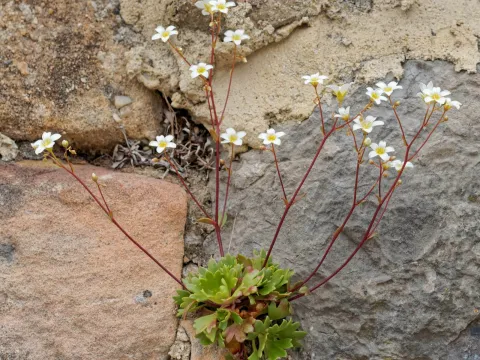
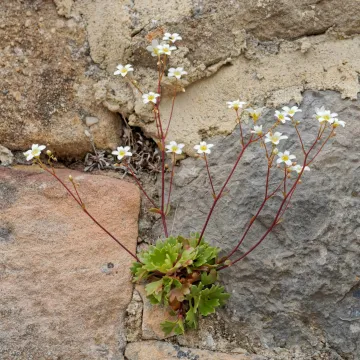
Botanically, this saxifrage is characterized by its rosettes of wedge-shaped, leathery leaves, which provide a textured ground cover throughout the year. The flower stalks typically rise to a height of about 15–25 cm, carrying clusters of delicate white flowers that appear during the spring and early summer seasons.
Successful cultivation requires attention to soil composition and water management. The plant demands a gritty, mineral-rich soil with excellent drainage to prevent root rot. It performs best in partial shade, as intense sunlight can dehydrate the foliage. Watering should be regulated to keep the soil moist but never waterlogged.
Beyond its ornamental value in rock gardens, Saxifraga cuneata requires minimal maintenance once established. Gardeners should watch for common pests like spider mites and root nematodes, which can weaken the plant. Common diseases typically include fungal infections, which are effectively managed by ensuring adequate airflow and avoiding overhead irrigation.
Photo gallery