Kidney saxifrage
Saxifraga geum
Description
Kidney saxifrage (Latin: Saxifraga geum) is a low-growing perennial herb belonging to the Saxifragaceae family. This species is highly valued in horticulture for its decorative foliage and its ability to form dense mats, making it an excellent groundcover for specialized garden areas.
The plant is native to the mountainous regions of Southwestern Europe, particularly the Pyrenees and parts of Ireland. As a high-latitude and alpine-adapted species, it thrives in temperate climates where it can benefit from cool air temperatures and consistently moist environmental conditions.
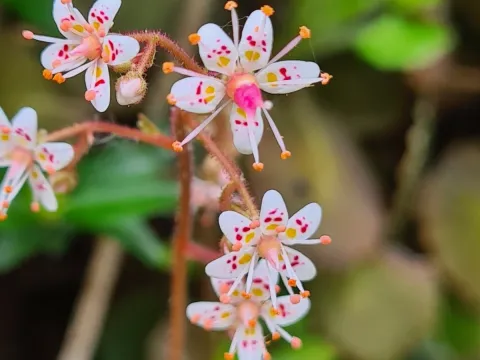
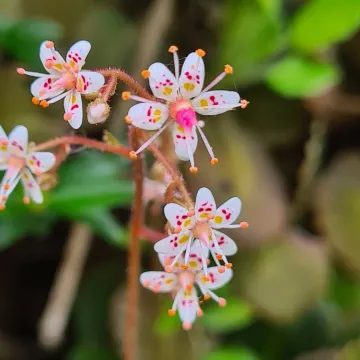
Botanically, the plant is characterized by a basal rosette of evergreen, kidney-shaped or rounded, leathery leaves with scalloped margins. Its flowering stems rise above the foliage to a height of 20–30 cm, displaying delicate panicles of small white flowers that often feature distinctive yellow or reddish spots at the base of the petals.
Successful cultivation requires specific environmental parameters: the plant prefers partial shade and moisture-retentive, well-draining soil. It is essential to ensure that the site does not become waterlogged, particularly during winter, as excessive moisture around the crown can lead to rapid decay of the plant tissue.
In landscaping, Kidney saxifrage is primarily used for alpine rockeries, shaded borders, and as a natural groundcover under tree canopies. While generally resilient, gardeners should monitor for pests such as slugs and snails, which are attracted to the succulent-like foliage, and ensure proper soil drainage to prevent fungal infections.
Photo gallery