Madeira saxifrage
Saxifraga maderensis
Description
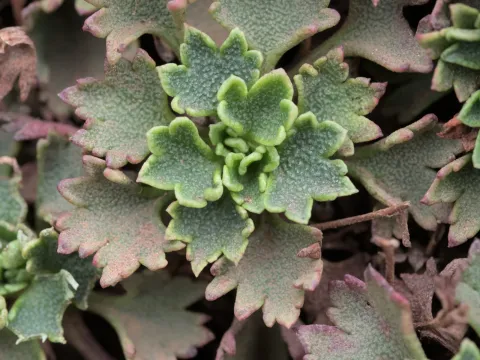
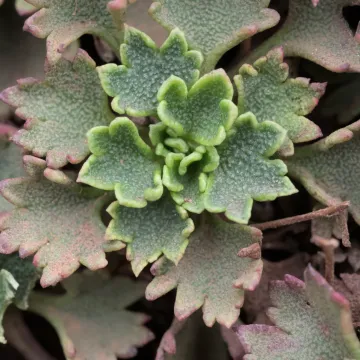
Madeira saxifrage (Saxifraga maderensis) is a distinctive perennial herb belonging to the family Saxifragaceae. Unlike its more common relatives, this species displays succulent-like properties with thick, fleshy leaves arranged in tight, aesthetic rosettes. It is a highly specialized plant that demands specific environmental conditions to maintain its structural integrity and health.
The plant originates from the Madeira archipelago, inhabiting rocky crevices and slopes. This geographical background dictates its agricultural requirements: it thrives in mild temperatures and humid air but cannot tolerate frost. In horticultural practice, it is primarily grown as an indoor or greenhouse plant to shield it from harsh seasonal fluctuations.
Botanically, Saxifraga maderensis is characterized by compact basal rosettes. During the reproductive phase, it produces elegant, branched inflorescences bearing white flowers. The root system is relatively delicate, necessitating a substrate that mimics its natural rocky habitat, prioritizing oxygen availability and preventing water stagnation around the roots.
Agricultural management centers on precision irrigation and soil composition. A well-draining, mineral-rich medium is essential for preventing root rot, which is the primary cause of failure in cultivating this species. Regular monitoring of the substrate moisture level is required, as the plant reacts poorly to both waterlogged soil and severe drought during the active growth season.
The primary use of the Madeira saxifrage is ornamental, serving as a focal point in specialized rock gardens, container collections, and botanical displays. While not a large-scale agricultural crop, it remains a significant subject for nursery propagation among enthusiasts of rare succulents. Proper ventilation is key to minimizing the risk of fungal infections and maintaining rosette density.
- High-porosity soil mix for optimal drainage.
- Avoidance of direct midday summer sunlight.
- Proactive monitoring for common indoor plant pests.
Photo gallery