Mossy saxifrage
Saxifraga muscoides
Description
Mossy saxifrage (Saxifraga muscoides) is a perennial herbaceous plant belonging to the Saxifragaceae family. This species is highly valued in horticulture for its dense, cushion-forming habit, which creates a soft, moss-like texture. It is a staple plant for rock gardens and alpine-style landscaping.
Native to the mountainous regions of Europe, specifically the Alps and Pyrenees, this plant is adapted to cold climates and rocky substrates. It thrives in locations that receive bright but filtered light, particularly in cooler northern exposures. It is perfectly suited for high-altitude zones or regions with moderate summer temperatures, where humidity is not excessive.
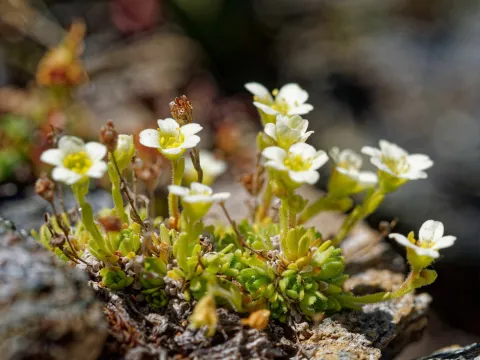
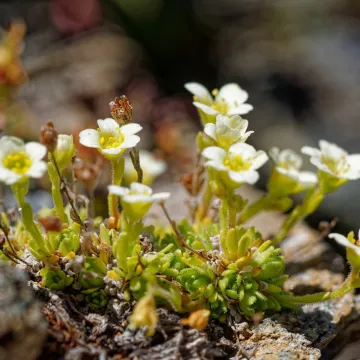
The botanical structure is characterized by compact rosettes of leaves that interlock to form a carpet-like mat. In late spring and early summer, the plant produces short, slender stalks bearing small white to yellowish-pink flowers. The root system is shallow and benefits from well-aerated soil that allows for rapid drainage after precipitation.
Cultivation requires a growing medium that is gritty, well-draining, and neutral to slightly acidic in pH. Proper maintenance includes ensuring the crown of the plant stays dry to prevent rot, particularly during wet winters. Watering should be consistent but cautious, as stagnant water will quickly damage the plant's health. Fertilizer should be applied sparingly, as over-fertilization can result in weak, floppy growth.
The primary use for this species is aesthetic enhancement in gardens. It is commonly utilized to fill crevices in rock walls, as an edging plant in paths, or as a foundational component in miniature alpine troughs. Its slow-growing nature makes it an excellent low-maintenance choice for gardeners looking for durable, long-term ground cover in specific climate zones.
- Monitor for snails and slugs that feed on succulent foliage.
- Ensure proper airflow to prevent fungal leaf spot diseases.
- Use inorganic mulch like crushed stone to protect the leaves from damp soil.
Photo gallery