Livelong saxifrage
Saxifraga paniculata
Description
Livelong saxifrage (Latin Saxifraga paniculata, also known as Saxifraga aizoon) is a perennial plant belonging to the Saxifragaceae family. This species is highly valued in horticulture for its resilience and unique architectural form, which makes it a staple in alpine gardens.
The plant originates from the mountainous regions of Europe, Asia, and North America. It is typically found growing in rock crevices and on limestone slopes. This natural habitat defines its physiological need for mineral-rich, well-draining soils and high levels of sun exposure.
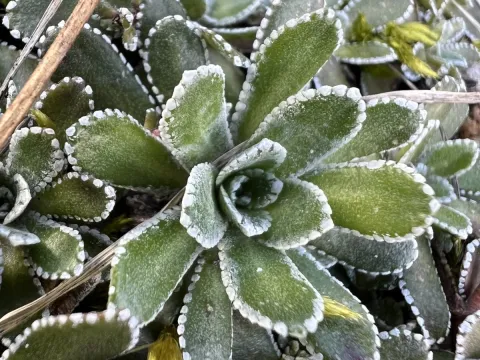
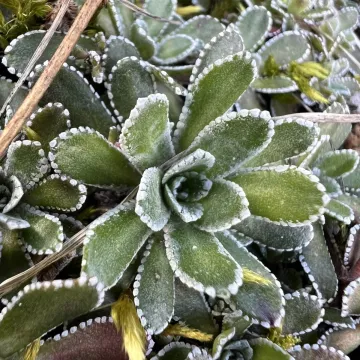
Botanically, it forms dense mats of basal rosettes consisting of leathery, tongue-shaped leaves with distinct marginal lime deposits. The blooming period features long, upright flowering stalks that carry panicles of white, cream, or sometimes pale yellow flowers, adding significant aesthetic value.
Cultivation requirements are focused on mimicking its native environment. The soil must be gritty, poor in nutrients, and have an alkaline to neutral pH. Providing sharp drainage is essential, as the roots are highly susceptible to rot if they remain in saturated soil conditions for extended periods.
In landscaping, this species is primarily used for rock gardens, trough plantings, and alpine crevices. Its ability to create long-lasting, evergreen ground cover with minimal maintenance requirements makes it a popular choice for both amateur and professional garden designs.
- Excellent cold hardiness (USDA zones 3-8).
- Minimal fertilizer requirements; excessive nutrients can weaken the plant.
- Susceptibility to fungal diseases if kept in poorly drained or humid environments.
- Maintenance involves removing old flower stalks to keep the foliage neat.
Photo gallery