Alpine brook saxifrage
Saxifraga rivularis
Description
Alpine brook saxifrage (Saxifraga rivularis) is a perennial herbaceous plant belonging to the Saxifragaceae family. This delicate species is well-known for its adaptation to harsh, cold environments, making it a unique botanical specimen for specialized garden collections.
The plant originates from the Arctic and subarctic regions of the Northern Hemisphere, as well as high-altitude alpine zones. In nature, it grows primarily in moist habitats, such as along stream banks, near melting snow, or in cool crevices where water seepage is abundant throughout the growing season.
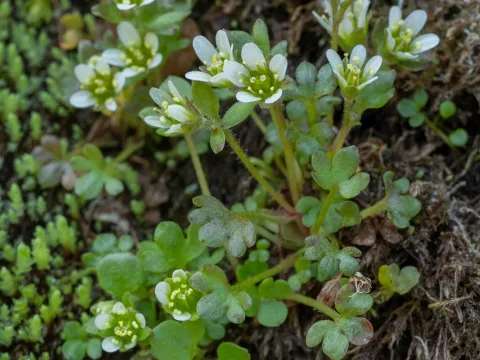
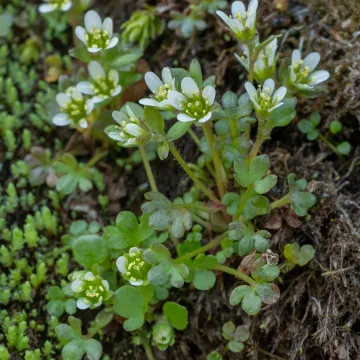
Botanically, it is defined by small, succulent-like leaves arranged in rosettes and tiny white flowers blooming on relatively short stems. Its growth habit is prostrate or tufted, which allows it to withstand strong winds and provide protection against desiccation in its native high-latitude habitats.
Cultivation requires replicating these cold, moist conditions. It thrives best in well-drained, humus-rich soil that remains consistently cool and moist. In agricultural or horticultural settings, it is essential to provide partial shade to prevent heat stress, as the plant does not tolerate high temperatures well.
The primary use of this culture is in rock gardens or alpine troughs where it adds a touch of natural beauty. To maintain health, one should monitor for root rot caused by poor drainage during warmer spells. Common pests include aphids or spider mites, which can be managed with standard horticultural practices to ensure the plant's longevity.
Photo gallery