Round-leaved saxifrage
Saxifraga rotundifolia
Description
The Round-leaved saxifrage (Saxifraga rotundifolia) is a herbaceous perennial plant belonging to the Saxifragaceae family. This species is highly valued in horticulture for its subtle beauty and its ability to thrive in cool, shady environments where many other alpine plants would struggle to establish themselves.
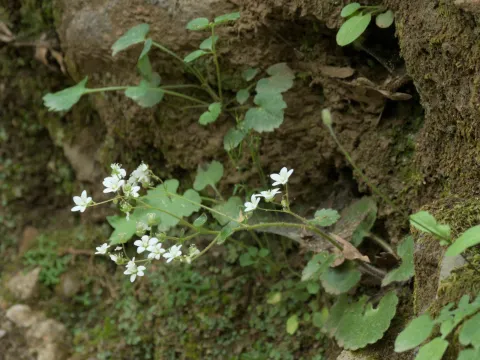
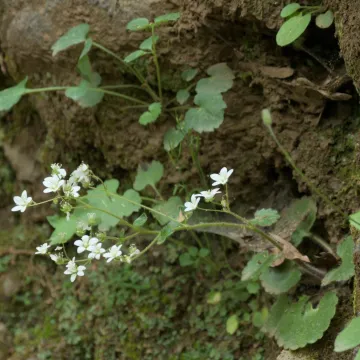
The plant originates from the mountain ranges of Central and Southern Europe. Its natural habitat includes damp rock crevices, wooded ravines, and the banks of mountain streams. Because of this background, it performs best in environments that mimic cool, humid, and well-drained mountain conditions, requiring thoughtful site selection by the gardener.
Botanically, the plant is characterized by a basal rosette of rounded, long-stalked leaves with crenate margins. During its blooming period, it produces slender, branching stems topped with delicate white flowers. These flowers are distinctively marked with small, reddish dots, which add a charming decorative element to the foliage throughout the growing season.
Successful cultivation requires strict adherence to specific agrotechnical standards:
- Soil conditions: Rich, moisture-retentive but well-draining soil with a neutral to slightly alkaline pH.
- Light exposure: Partial shade is essential, especially in warmer climates to avoid leaf scorch.
- Hydration: Regular watering is necessary, ensuring the roots remain cool but not waterlogged.
- Mulching: Recommended to stabilize soil temperature and prevent rapid moisture loss.
In terms of agricultural and horticultural use, it is primarily grown for its aesthetic value in rock gardens, woodland borders, and as a ground cover in shady areas. The species is relatively robust, though growers should be vigilant against pests like aphids or fungal issues if soil drainage is insufficient. Proper maintenance ensures a long-lived and healthy specimen in the garden.
Photo gallery