St. Patrick's cabbage
Saxifraga spathularis
Description
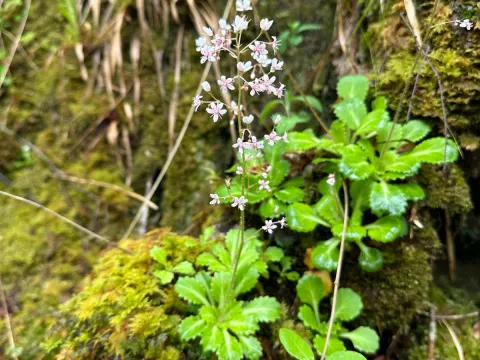
St. Patrick's cabbage (Saxifraga spathularis) is an evergreen perennial plant belonging to the Saxifragaceae family. It is widely recognized in horticulture as a reliable groundcover, forming dense, low-growing rosettes of leathery, glossy foliage that persists throughout the winter months.
Originating primarily from the western regions of Europe, specifically Ireland and northern Spain, the species is native to rocky slopes and damp woodland environments. This botanical origin makes it perfectly suited for cool, maritime climates where it can benefit from consistent soil moisture and atmospheric humidity.
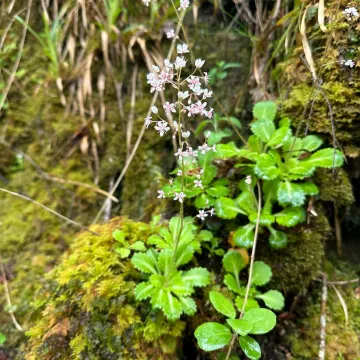
The botanical features include distinct spatula-shaped leaves with serrated margins arranged in compact rosettes. During late spring, the plant produces slender, erect flower stalks reaching 20–30 cm in height, which bear panicles of small, white star-shaped flowers characterized by delicate yellow or red spots on the petals.
Cultivation requirements focus on providing partial shade and well-draining, moisture-retentive soil. While the plant appreciates damp conditions, it is strictly intolerant of waterlogging, which often leads to root rot. Incorporation of organic matter and grit into the soil profile significantly improves longevity and plant vigor in a garden setting.
- Requires partial shade for optimal foliage health.
- Prefers neutral to slightly acidic, well-drained soil.
- Benefits from annual light feeding in early spring.
- Relatively low maintenance with minimal pruning needs.
Primary landscape uses include rock gardens, alpine troughs, and shaded border edges where it creates a naturalistic look. The species is generally resistant to major pests; however, gardeners should monitor for slugs in wet seasons and ensure sufficient airflow to prevent fungal leaf spot diseases. It serves as an excellent companion plant for ferns and other shade-loving perennials.
Photo gallery