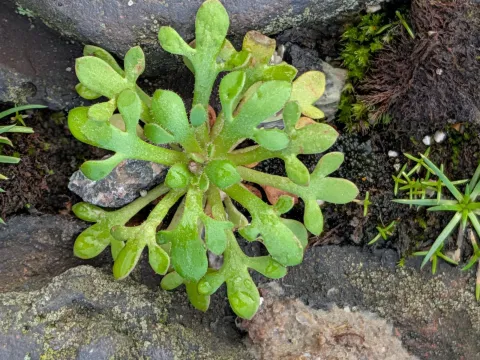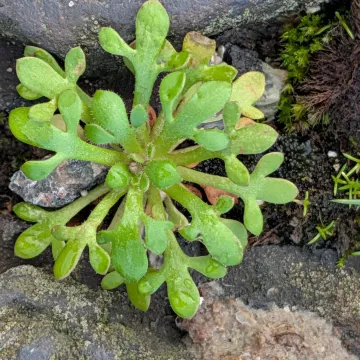
Rue-leaved saxifrage
Saxifraga tridactylites
Description
Rue-leaved saxifrage (Saxifraga tridactylites) is an annual herbaceous plant belonging to the Saxifragaceae family. This species is known for its ephemeral growth habit, allowing it to complete its life cycle during the early spring before the onset of summer drought periods typical of its native range.
The plant originates from Europe, the Mediterranean region, and parts of Western Asia. It is primarily found in open habitats such as sandy soils, limestone pavements, and disturbed agricultural land. Its distribution is strongly correlated with the availability of well-drained, nutrient-poor substrates.
Botanically, it is characterized by glandular hairs covering the stems and leaves, which are usually divided into three distinct lobes. The plant rarely grows higher than 15 cm. Its reproductive strategy relies on prolific seed production, which ensures colonization of suitable patches in the following season.
Agronomic requirements are minimal due to its adaptation to harsh conditions. Successful establishment requires full sun exposure and soils with high permeability. The plant performs poorly in compacted or waterlogged soils, which limits its presence to well-aerated environments.
- Requires high light intensity.
- Thrives on alkaline or calcareous substrates.
- Sensitive to excessive competition from dense vegetation.
While not a primary agricultural crop, it is of interest in ecological studies of meadow health and biodiversity. Pests and diseases primarily include fungal infections during damp spring weather and opportunistic sap-sucking insects that may affect the plant's overall vigor during the short flowering stage.
Photo gallery