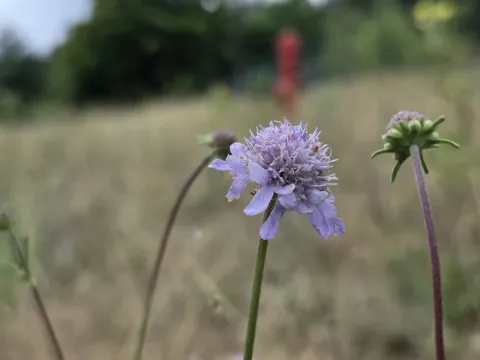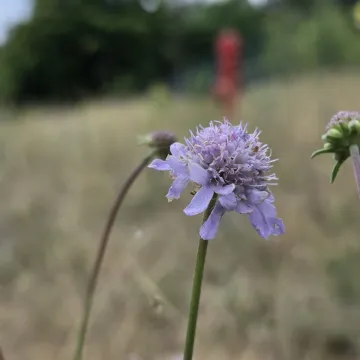
Grey scabious
Scabiosa canescens
Description
Grey scabious (Scabiosa canescens) is a perennial herbaceous plant belonging to the Caprifoliaceae family. It is recognized for its hardiness, drought tolerance, and aesthetic value, making it a popular choice for sustainable landscaping and meadow-style gardening. In agricultural settings, it serves as both a decorative plant and a significant pollinator-friendly crop.
Native to Central and Eastern Europe, this species thrives in dry habitats such as steppes, limestone grasslands, and rocky slopes. Its evolutionary adaptation to harsh, nutrient-poor, and dry environments allows it to perform reliably in garden soils that are often unsuitable for less resilient perennials, effectively bridging the gap between wild flora and ornamental crops.
Botanically, the plant is characterized by its slender, hairy stems reaching heights of 20 to 50 cm. The foliage is typically fine and greyish, providing a neutral backdrop for its inflorescences. The flowers form distinct, rounded heads in shades ranging from soft lilac to deep blue, which bloom from early summer well into autumn, providing a long-lasting ornamental effect.
Regarding cultivation requirements, Scabiosa canescens demands full sun and excellent drainage. It is highly sensitive to waterlogged soils, which can lead to rapid root degradation. Ideal conditions involve well-aerated, slightly alkaline soils. Minimal fertilization is required, as the plant is adapted to low-fertility conditions; however, deadheading after the primary bloom is recommended to encourage secondary growth.
The economic and practical utility of this culture includes:
- Ornamental horticulture: ideal for dry, gravel-based gardens and rockeries.
- Beekeeping: recognized as a valuable late-summer nectar source for bees and various butterflies.
- Environmental stabilization: useful for planting in poor or disturbed soils where erosion control is necessary.
Management of pests and diseases is relatively straightforward if site conditions are maintained. High humidity is the primary catalyst for fungal diseases such as powdery mildew and root rot. Pest pressure is generally low, although aphids may occasionally colonize the soft flower buds during spring. Integrated pest management, including natural predators and improved air circulation around the plants, is the preferred method of control.
Photo gallery