Water rustwort
Scapania undulata
Description
Water rustwort (Scapania undulata) is a prominent species of liverwort belonging to the Scapaniaceae family. As a non-vascular plant, it acts as a key component in riparian ecosystems, providing essential micro-habitats for diverse microorganisms and helping to stabilize damp soil structures through its dense matting growth habit.
The native distribution of this species covers a wide range across the Northern Hemisphere, predominantly found in cold, humid regions. It thrives in environments such as mountain stream banks, waterfall splash zones, and wet woodland soil. Its presence is often used as a natural indicator for high water quality and stable, moist environmental conditions.
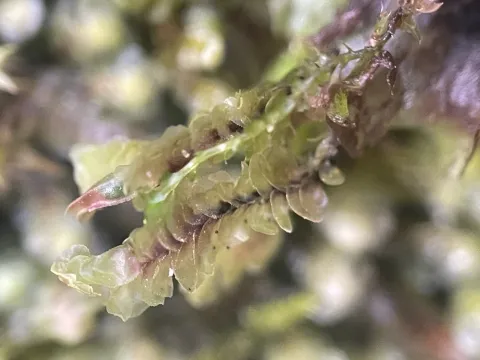
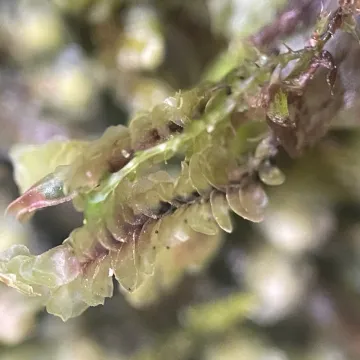
The botany of the plant is defined by its leafy shoots that can grow up to 10 cm in length. The leaves are arranged in two distinct rows and feature a characteristic fold, forming a keel that gives the plant a distinctively corrugated appearance. Pigmentation varies significantly depending on light exposure, ranging from vivid green to dark purple or reddish-brown.
Cultivation requirements for Scapania undulata are highly specific, as it is an obligate hydrophyte. It requires constant moisture, cool temperatures, and a substrate that is free from heavy pollutants or excessive salts. Unlike traditional crops, it does not require artificial fertilizers, as it absorbs nutrients directly from the water passing over its surface.
In terms of practical utility, the plant is valued in specialized landscaping for aquatic features, such as moss gardens and ecological water filtration ponds. While it is rarely subject to traditional agricultural pests, it can be negatively impacted by eutrophication and habitat destruction. Sustainable management involves preserving the natural hydrological cycles and ensuring the purity of the local water sources.
Photo gallery