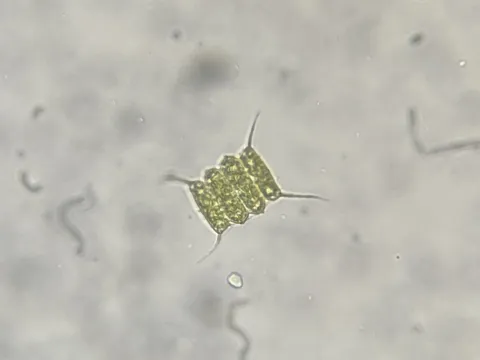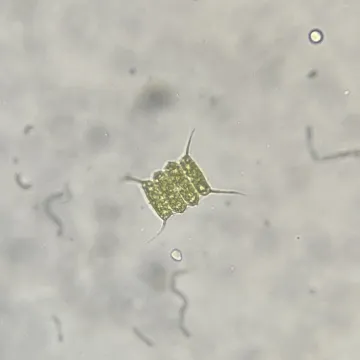
Scenedesmus quadricauda
Scenedesmus quadricauda (Turp.) Breb
Description
Scenedesmus quadricauda is a highly adaptive species of green microalgae belonging to the Scenedesmaceae family. It is widely recognized in phycotechnology for its impressive growth rates and its efficiency in converting light energy and mineral nutrients into high-protein organic biomass.
Originating from diverse freshwater habitats worldwide, this species has successfully adapted to a wide range of climates. It is frequently found in eutrophic ponds and lakes, demonstrating high resilience to varying nutrient concentrations, which makes it a robust candidate for large-scale industrial farming systems.
Botanically, this microalga forms coenobia, which are colonies composed of four elongated cells arranged in a single row. Each cell is characterized by a cell wall and long apical spines or bristles. These structural features aid in nutrient absorption and provide physical protection against smaller predators in aquatic environments.
The agrotechnical requirements for cultivating Scenedesmus quadricauda include a controlled environment with temperatures ranging from 20°C to 30°C. Essential inputs involve CO2 supplementation, adequate light intensity (artificial or natural), and a well-balanced mineral medium. Regular monitoring of the culture density is necessary to optimize nutrient uptake and prevent biomass stagnation.
- Rapid biomass multiplication rate
- High nutritional profile (proteins, essential lipids)
- Versatility in water treatment and nutrient removal
- Ease of scale-up in open pond or bioreactor systems
- High market demand for aquaculture feed additives
The primary economic value lies in its use as a protein-rich feed source for fish and crustacean larvae. While the species is highly productive, growers must monitor for biological threats such as contamination by rotifers or pathogenic bacteria, which can rapidly diminish a batch. Proper filtration and sterile laboratory handling are essential for maintaining a monoculture.
Photo gallery