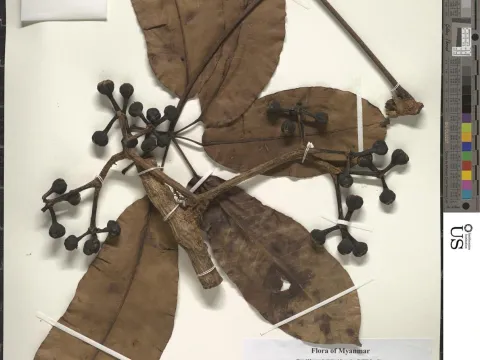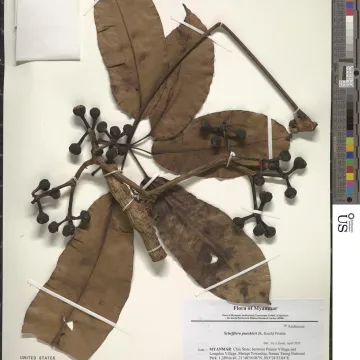
Schefflera pueckleri
Schefflera pueckleri
Description
Schefflera pueckleri is an evergreen, woody plant belonging to the Araliaceae family. Unlike some of its more common relatives, this species is noted for its refined foliage and specific environmental requirements. It is highly valued by professional horticulturists and interior designers for its elegant structure and its ability to add significant volume and green texture to greenhouses and controlled interior spaces.
The species originates from the tropical forests of Southeast Asia. In its natural habitat, it often grows as an epiphyte or a small-sized tree, thriving in high-humidity and warm settings. In agricultural and horticultural contexts, the range is restricted to tropical environments or managed indoor facilities, as the species is highly sensitive to cold, drafts, and fluctuating climate conditions common in temperate zones.
Botanically, Schefflera pueckleri is characterized by its palmate, compound leaves supported by long petioles. As the plant matures, the stem undergoes lignification, allowing for the development of impressive standard or shrub forms. The root system is primarily superficial, necessitating a porous, well-draining substrate to prevent oxygen deprivation and moisture-related stress, which are critical for the plant's long-term health.
The agronomic management of this culture requires a balance of bright, indirect sunlight and consistently high atmospheric humidity. Direct solar radiation must be avoided to prevent foliar scorching. Proper irrigation is paramount; the substrate should remain moist but never waterlogged. Fertilization with balanced mineral nutrients during the peak growing season is essential to sustain vigor and prevent premature leaf drop.
The primary utility of the plant lies in indoor landscaping and ornamental horticulture. Growers must monitor the plant closely for typical health issues:
- Scale insects (Coccidae) that infest stems and leaf undersides.
- Spider mites, which proliferate in environments with low humidity.
- Root rot pathogens exacerbated by poor drainage and water stagnation.
- Mealybugs, which can cause significant sap depletion if left unchecked.
Photo gallery