Rannoch-rush
Scheuchzeria palustris
Description
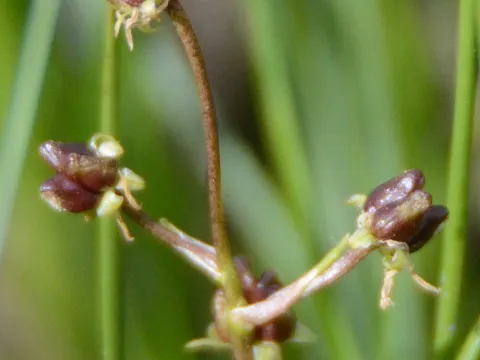
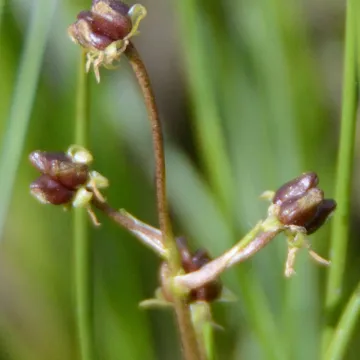
Rannoch-rush (Scheuchzeria palustris) is a perennial herbaceous plant and the sole member of the family Scheuchzeriaceae. This plant is a classic example of a glacial relict, specialized in thriving within the harsh, nutrient-poor, and highly acidic environment of northern hemisphere peatlands.
Botanically, it is characterized by its creeping rhizomes, which allow the plant to spread through the moss layer of bogs. Its leaves are linear and slender, featuring a unique pore at the tip that facilitates guttation. During the flowering period, it produces a small raceme of greenish-yellow flowers that are adapted for wind or self-pollination in open, moist areas.
The distribution of this species spans across the boreal and temperate zones of Europe, Asia, and North America. It demands specific climatic conditions with high humidity and prefers undisturbed sphagnum moss habitats. While not a commercial agricultural crop, its growth cycle is strictly tied to the hydrology of bogs, and it cannot be cultivated under standard field conditions.
In terms of economic and ecological significance, the plant is primarily valued as a key peat-forming species. The accumulation of its biomass over centuries contributes to the formation of peat deposits, which are vital for carbon sequestration. It is often used as a biological indicator for assessing the health and environmental stability of wetland ecosystems.
Scheuchzeria is naturally resistant to most common agricultural pests and diseases due to the extreme conditions of its habitat, which inhibit the survival of many pathogens. However, the species is highly sensitive to external changes. The primary threat to its survival is the drainage of wetlands, which rapidly alters the soil acidity and moisture levels, leading to the local extinction of this sensitive plant.
Photo gallery