Schivereckia podolica
Schivereckia podolica
Description
Schivereckia podolica is a perennial herbaceous plant belonging to the Brassicaceae family. As a rare and specialized species, it serves as a significant biological indicator for calcareous soil environments and rocky outcrops across its native regions in Eastern Europe.
The plant originates from the Podolian region, thriving primarily on limestone cliffs and arid steppe slopes. Its distribution is highly localized, making it a priority subject for environmental conservation and academic study regarding the evolution of plant life in challenging geological conditions.
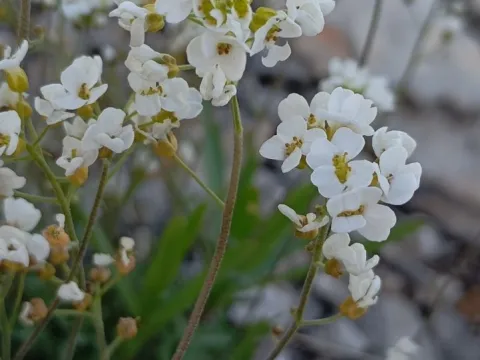
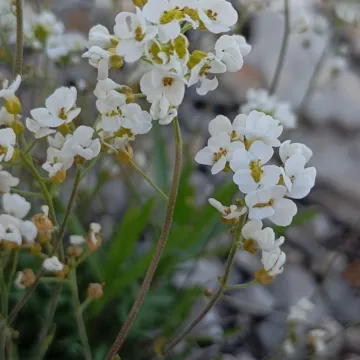
Botanically, Schivereckia podolica features a basal rosette of leaves and produces elegant racemes of small white flowers during early spring. The plant possesses a robust taproot system, which is a structural adaptation allowing it to anchor securely in crevices and survive periods of severe hydrological stress.
Regarding its ecological requirements, the species demands high solar exposure and alkaline soil conditions. It is extremely intolerant of waterlogging and nutrient-rich, heavy soils. Cultivation attempts must prioritize mimicking these natural, well-drained, and mineral-rich rocky substrates to ensure plant health.
While not a staple agricultural crop, the species holds potential in genetic research, particularly for breeding traits related to drought resistance in related commercial Brassicaceae. Typical challenges include susceptibility to general cruciferous pathogens, such as fungal infections and flea beetles, which necessitate careful monitoring in any controlled environment.
Photo gallery