Slender bluestem
Schizachyrium tenerum
Description
Slender bluestem (lat. Schizachyrium tenerum) is a perennial grass species belonging to the Poaceae family. It is a vital component of native grasslands and is recognized for its ability to produce sustainable forage and maintain soil stability in challenging climatic conditions.
The species is native to the Americas, with its primary range extending through the southern United States, Mexico, and Central America. It typically thrives in dry prairies, open meadows, and well-drained slopes, demonstrating a remarkable resilience to heat and periodic water shortages within its natural habitats.
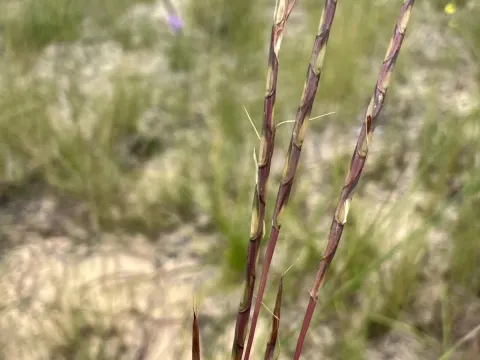
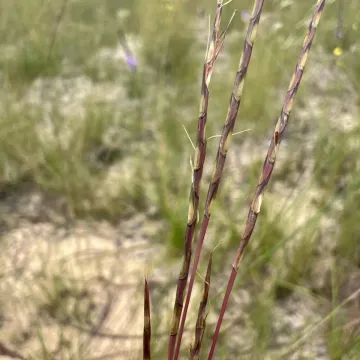
Botanically, this grass is a bunchgrass characterized by its slender, delicate stems and narrow leaf blades, which often turn reddish-brown or purple as the season progresses. Its root system is deeply penetrating and fibrous, which not only provides drought resistance but also makes it an excellent candidate for stabilizing sandy or erodible soils.
Cultivation of slender bluestem requires specific environmental conditions. It thrives in well-drained, nutrient-poor, or sandy soils and requires full sun exposure to reach its maximum productivity. In an agricultural context, farmers must manage grazing intensity carefully, as the plant needs sufficient rest periods to recover and reseed effectively.
The primary agricultural applications of slender bluestem include livestock grazing and land reclamation. Due to its growth habit, it is utilized in various ecological projects and farming systems:
- Forage production in extensive beef cattle operations.
- Stabilization of sloping land to prevent erosion.
- Restoration of degraded rangelands and native grassland ecosystems.
Regarding health management, the crop is generally hardy, though it may be susceptible to leaf spot diseases or rust under prolonged humid conditions. Insect pests are rarely an issue for well-established stands. Effective management practices usually involve avoiding overgrazing and conducting periodic prescribed burns to stimulate new growth and control undesirable woody plant encroachment.
Photo gallery