Schotia capitata
Schotia capitata
Description
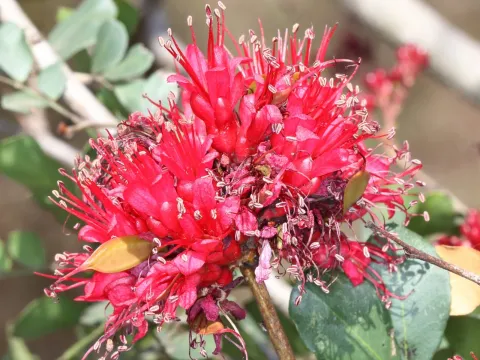
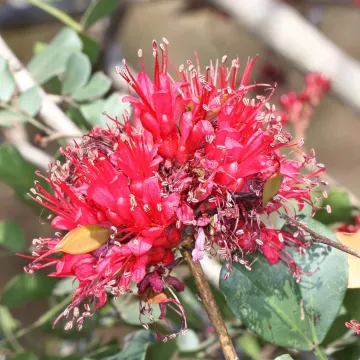
Schotia capitata, commonly known as the dwarf boerboon, is a distinctive evergreen shrub or small tree within the Fabaceae family. It is widely recognized for its vibrant, crimson-red flower clusters that emerge directly from the woody stems, creating a striking visual impact.
Native to the subtropical regions of Southern Africa, including Mozambique and KwaZulu-Natal, this plant thrives in warm environments. Its natural habitat includes coastal forests and thickets, indicating its preference for areas with moderate humidity and protection from extreme temperature fluctuations.
Botanically, Schotia capitata is characterized by its glossy, dark green pinnate foliage and dense, rounded inflorescences. The plant can reach a height of approximately 3 to 5 meters. Its flowers are rich in nectar, making it a highly valued plant for supporting local bird life and pollinators in its native range.
Cultivation requires well-drained, nutrient-rich soil. It is essential to ensure that the planting site does not suffer from waterlogging, as the root system is sensitive to damp conditions. In terms of light, full sun is preferred to encourage maximum blooming, though the tree can tolerate partial shade in hotter climates.
In terms of agricultural and landscape use, it is primarily valued for its ornamental properties. It is relatively pest-resistant, although growers should monitor for common pests like scale insects. It serves as an excellent feature plant or a flowering hedge in frost-free regions, requiring minimal maintenance once established.
- Requires consistent watering during the establishment phase.
- Pruning helps maintain a tidy, bush-like structure.
- Susceptible to frost damage, making it unsuitable for temperate winters without protection.
Photo gallery