Schouwia thebaica
Schouwia thebaica
Description
Schouwia thebaica is a desert-dwelling herbaceous plant belonging to the Brassicaceae family. It is recognized for its exceptional resilience in arid environments, serving as a vital forage resource for livestock and, to a limited extent, as a food source in regions where traditional agriculture is challenging to maintain due to extreme drought.
The plant originates from the arid regions of North Africa and the Arabian Peninsula. Its natural range is characterized by sandy deserts and wadis, where it has evolved to thrive under harsh conditions with minimal water availability. Its presence is essential for local ecosystems as it provides green biomass in regions that are otherwise barren for most of the year.
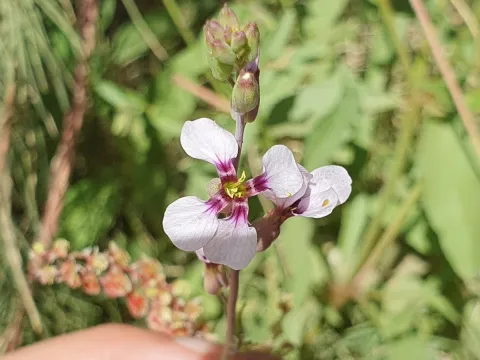
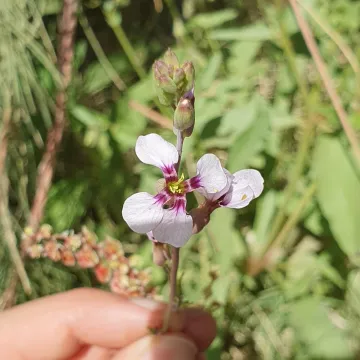
Botanically, Schouwia thebaica displays succulent-like traits with fleshy leaves and a robust root system adapted for efficient water uptake. It follows a rapid growth cycle, emerging and developing quickly after rainfall events. The flowers are typical for the mustard family, and the plant efficiently produces seeds to ensure survival during prolonged dry spells.
Agronomic management for this species focuses on replicating its natural habitat requirements. Sandy, free-draining soils are mandatory, as the plant is highly susceptible to root rot in waterlogged conditions. It requires high solar radiation and thrives in temperatures between 25°C and 35°C. Irrigation must be carefully managed to avoid over-saturation of the root zone.
- Serving as an important fodder source for camels and goats in arid zones.
- Potential use in desert land restoration and stabilization of sandy dunes.
- Utilized by local communities as a seasonal green leafy vegetable.
- Scientific interest for potential genetic traits regarding extreme drought tolerance.
The primary agricultural challenges include infestations by flea beetles, which are common pests of Brassicaceae crops. Furthermore, under improper irrigation, the plant can be severely impacted by various fungal root pathogens. Successful cultivation relies on minimizing humidity levels around the foliage and ensuring the substrate allows for rapid drainage after any moisture application.
Photo gallery