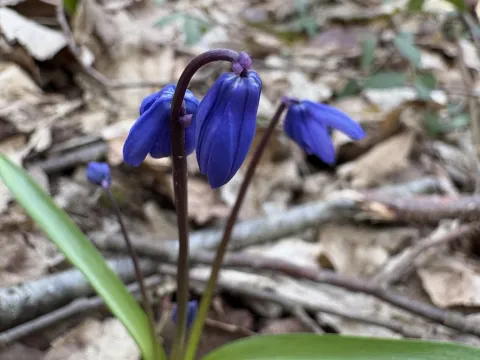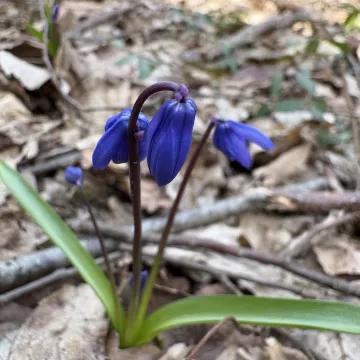
Siberian squill
Scilla siberica Andrews
Description
Siberian squill (Scilla siberica Andrews) is a popular perennial bulbous plant belonging to the Asparagaceae family. Despite its common name, it is native to the Caucasus, Turkey, and Russia, rather than Siberia. It is widely cultivated globally as an essential early spring ornamental plant known for its hardiness and rapid naturalization.
The plant features small ovoid bulbs, linear basal leaves, and iconic nodding bell-shaped flowers. Typically reaching a height of 10–20 cm, the flowers are noted for their vibrant blue coloration, though white-flowered variants also exist. The root system consists of annual contractile roots that help the plant maintain its depth in the soil.
Siberian squill thrives in full sun to partial shade, particularly in deciduous woodlands where it can bloom before the tree canopy fully forms. It prefers well-drained, nutrient-rich soils with moderate moisture content. The plant is remarkably cold-hardy and can tolerate a variety of soil types as long as they are not waterlogged.
Agricultural and gardening practices are straightforward: bulbs should be planted in late summer or autumn at a depth of 8–10 cm. Once established, they require minimal intervention, such as occasional fertilization if the soil is poor. Propagation is primarily achieved through offsets or natural division, allowing for the rapid expansion of colonies over time.
In terms of usage, it is a staple in rock gardens, borders, and lawn naturalization. The plant is generally disease-resistant, though it may suffer from fungal infections like botrytis or root rot in heavy, wet clay soils. Pests such as rodents may consume the bulbs during winter, necessitating protective measures in areas with high pest activity.
Photo gallery