Scirpoides holoschoenus
Scirpoides holoschoenus
Description
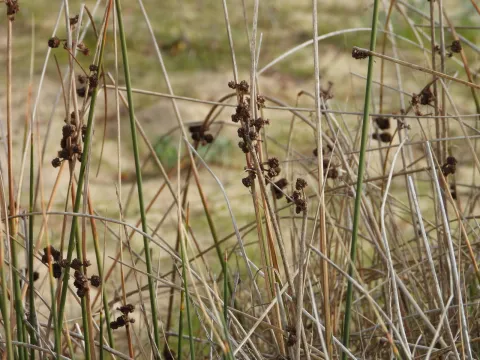
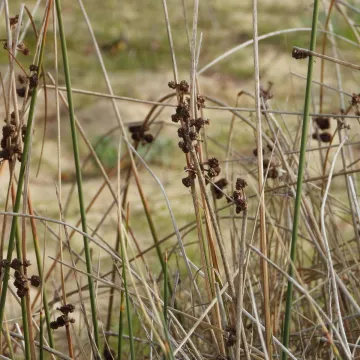
Scirpoides holoschoenus, commonly referred to as the round-headed club-rush, is a perennial herbaceous plant belonging to the Cyperaceae family. It forms dense clumps of rigid, cylindrical stems topped with distinctive, globular flower heads. As a member of the sedge family, it is highly adapted to wet environments and is prized for its structural durability.
The plant originates from the Mediterranean region, with a natural range extending across Europe, Asia, and North Africa. In agricultural and environmental contexts, it is increasingly cultivated for its utility in wetland restoration and as a hardy species capable of thriving in saline or waterlogged soils where traditional crops often fail to establish.
Botanically, the plant features a robust root system that plays a crucial role in soil stabilization. Its leaves are largely basal and scale-like, an adaptation that reduces water loss through transpiration. The inflorescences are dense, spherical clusters that provide aesthetic value throughout the growing season and often persist even after the seeds have matured.
Cultivation requirements are relatively straightforward, focusing on adequate moisture levels and sunlight. While it prefers moist soils, it can tolerate temporary dry spells once established. It does not require fertilizers in naturalized settings, as it is efficient at extracting nutrients from its environment, making it a low-input crop suitable for sustainable land management projects.
Primary applications for this plant include:
- Phytoremediation of wastewater in artificial wetland systems.
- Erosion control on riverbanks and drainage ditch borders.
- Landscaping in ornamental ponds and water gardens.
- Habitat creation for beneficial aquatic and semi-aquatic wildlife.
Common pests and diseases typically involve fungal issues during periods of stagnant water and poor air circulation. While rarely susceptible to severe infestations, aphids may occasionally be present. Proper management, including ensuring water movement and thinning out overcrowded patches, is usually sufficient to maintain the health and vigor of the plant stand.
Photo gallery