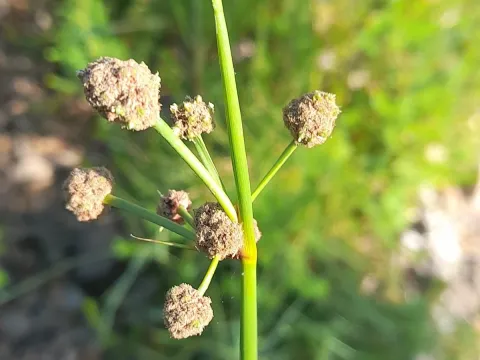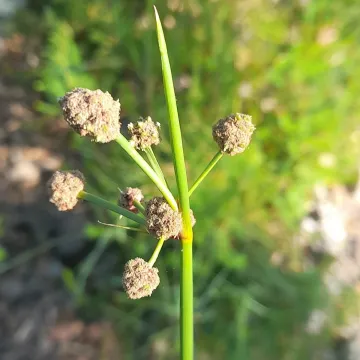
Southern bulrush
Scirpus australis
Description
Southern bulrush (lat. Scirpus australis) is a perennial herbaceous plant belonging to the sedge family (Cyperaceae). Within agricultural and ecological systems, this plant is valued for its ability to thrive in aquatic and semi-aquatic habitats, effectively serving as a structural component of wetland biodiversity.
Originating from temperate and subtropical regions, the plant is widely distributed in marshy areas and along freshwater margins. It is highly adapted to varying hydrologic regimes, showing significant resilience in areas prone to seasonal flooding, which makes it a sustainable choice for wetlands management.
Botanically, Scirpus australis is characterized by a robust rootstock and dense, upright stems. Its growth habit allows it to form extensive mats, which effectively bind soil and reduce sediment transport. This structural integrity is a key feature that dictates its specific role in soil conservation and land management.
The agrotechnical requirements for this species are centered on hydric soil conditions. It requires high moisture content and nutrient-rich substrate to achieve optimal biomass production. Propagation is generally performed through rhizome cuttings, which demonstrate high survival rates when planted in moist, silt-heavy soils during the early growing season.
Common industrial and agricultural uses include:
- Application in constructed wetlands for wastewater treatment and nutrient removal.
- Production of fibers for traditional weaving, matting, and artisanal goods.
- Erosion control and shoreline stabilization of water bodies.
- Providing natural habitat for beneficial wetland wildlife and waterfowl.
Typical plant health issues involve fungal pathogens thriving in stagnant water and occasional infestation by stem-boring insects. Agronomic management relies on maintaining the appropriate water flow and density, which prevents the buildup of pathogens and ensures the long-term productivity of the planting site.
Photo gallery