Pendulous bulrush
Scirpus pendulus Muhl.
Description
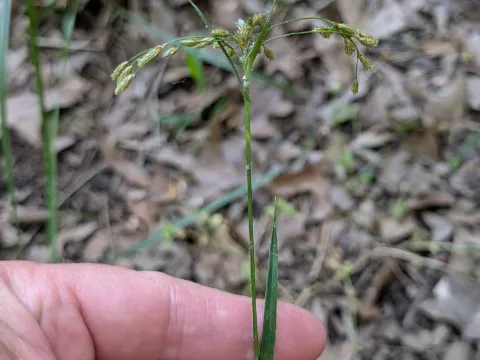
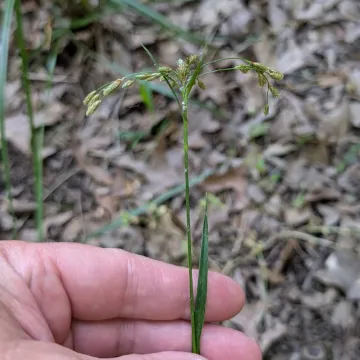
Pendulous bulrush (Scirpus pendulus Muhl.) is a perennial herbaceous plant belonging to the Cyperaceae family. Known for its distinct drooping inflorescences, this species is increasingly valued in agricultural and environmental management as a robust plant for wetland restoration and aesthetic landscape design.
The native range of the species is primarily in North America, where it thrives in moist meadows, marshes, and along riverbanks. As a versatile crop, it has been adapted for various regions where water management and soil stabilization are essential. Its ability to tolerate saturated soil conditions makes it a superior choice for sites prone to seasonal flooding.
Botanically, Scirpus pendulus forms dense clumps with triangular stems that reach up to 1 meter in height. The foliage is linear and bright green, providing a structural element in aquatic gardens. The plant produces unique, dangling spikelets that mature from late spring to summer, serving as an identifying feature that distinguishes it from other Scirpus species.
Regarding cultivation requirements, the plant prefers full sun to partial shade and consistently moist or wet soils. It thrives in loamy or heavy clay substrates rich in nutrients. Agricultural practices involve monitoring soil moisture levels, ensuring the site does not dry out completely, and implementing division of the rhizomes every few years to maintain plant vigor and prevent overcrowding.
- Erosion control on pond and stream banks.
- Phytoremediation in wastewater treatment areas.
- Providing habitat for local wildlife.
- Low-maintenance landscaping in rain gardens.
While generally hardy, the plant can be susceptible to fungal pathogens if grown in stagnant water with poor aeration or high temperatures. Common pests include aphids or leaf-feeding insects, although significant infestations are infrequent. Overall, Scirpus pendulus is a low-maintenance, ecologically beneficial crop that provides sustainable solutions for wet-site management.
Photo gallery