Annual knawel
Scleranthus annuus L.
Description
Annual knawel (Scleranthus annuus L.) is a small, herbaceous plant belonging to the Caryophyllaceae family. In agricultural settings, it is widely recognized as a weed species that frequently infests cultivated fields, particularly those with low soil fertility and acidic characteristics. Its ability to survive in harsh conditions makes it a significant subject for agricultural study.
The plant originates from Europe and parts of Western Asia but has expanded its range across various temperate regions globally. It thrives in open, disturbed areas such as arable fields, pastures, and sandy heaths. Because it is highly adaptive, it has become a common feature in marginal agricultural lands where soil nutrients are depleted or the pH levels are poorly managed.
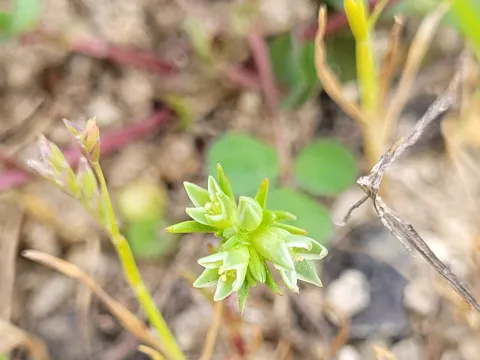
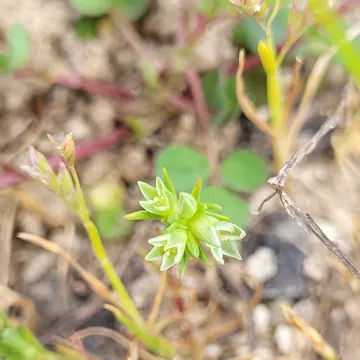
Botanically, the plant is characterized by a sprawling, branched habit and linear, needle-like leaves that form dense clusters. The flowers are small, greenish, and lack true petals, surrounded by stiff, pointed sepals. This morphological structure provides the plant with resilience against moisture loss and physical disturbances common in field environments.
Regarding cultivation and environmental requirements, Annual knawel is a classic bioindicator of acidic and nutrient-poor sandy soils. It shows a preference for light-textured soils where competition from dominant grasses is limited. Agronomic management of the species typically focuses on soil conditioning, specifically lime application to correct pH, which drastically reduces the plant's competitive advantage over field crops.
While not a primary host for major crop diseases, its presence in fields can interfere with harvesting and reduce overall crop yields through competition for space and resources. Integrated pest management, including precise herbicide timing and competitive crop rotation, is essential for its control. The species' long-term seed viability in the soil necessitates sustained attention to prevent re-infestation over multiple seasons.
Photo gallery