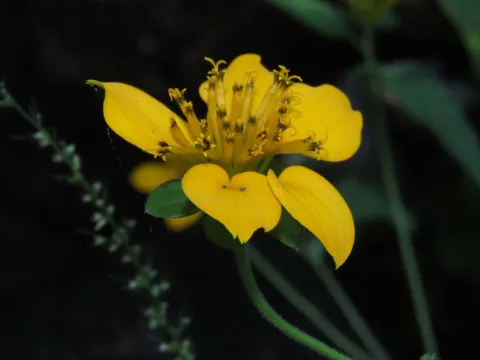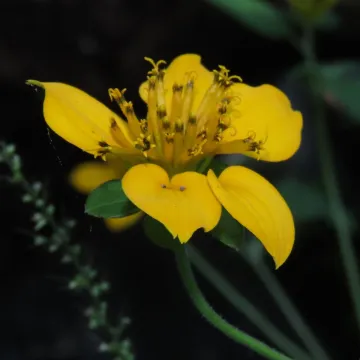
Sclerocarpus divaricatus
Sclerocarpus divaricatus
Description
Sclerocarpus divaricatus is an annual herbaceous plant belonging to the Asteraceae family. Within agricultural systems, this plant is primarily recognized for its robust growth patterns in open habitats and its role as a naturally occurring species that can thrive in environments affected by human land use and cultivation practices.
The native distribution of this species is largely confined to the Americas, specifically within tropical and subtropical zones. It has demonstrated an ability to establish itself successfully in disturbed soils, making it a common sight in fields and roadsides. Its geographical adaptation allows it to flourish in diverse environmental conditions provided there is sufficient light.
Morphologically, the plant is characterized by branching stems and composite flower heads typical of the daisy family. Its seeds are equipped for efficient dispersal, which contributes to its presence in agricultural landscapes. The plant typically completes its life cycle within a single growing season, focusing energy on rapid biomass production and subsequent seed set.
Regarding cultivation and environmental requirements, Sclerocarpus divaricatus prefers well-drained soil and high levels of solar irradiance. It is notably resilient to high temperatures and can withstand periods of mild drought, which are common in its primary range. Soil fertility impacts the height and total biomass of the plant, though it remains competitive even in nutrient-poor substrates.
In terms of agricultural management, this plant is often treated as a weed that requires monitoring to ensure crop yields are not compromised. Effective management strategies involve mechanical weeding during the early stages of the crop cycle and the application of targeted herbicides where necessary. Continued research into the ecological role of this species aids in developing sustainable control measures that protect biodiversity while maintaining agricultural productivity.
Photo gallery