Scolochloa festucacea
Scolochloa festucacea
Description
Scolochloa festucacea, commonly known as rivergrass or whitetop, is a perennial rhizomatous grass belonging to the Poaceae family. This species is highly adapted to wetland environments and is a dominant plant in riparian zones, shallow marshes, and flooded meadows.
The geographic distribution of this species spans the temperate regions of the Northern Hemisphere, including large parts of North America and Eurasia. It typically thrives in habitats characterized by seasonal flooding, making it a critical species for agricultural productivity in low-lying areas that are unsuitable for conventional cereal crops.
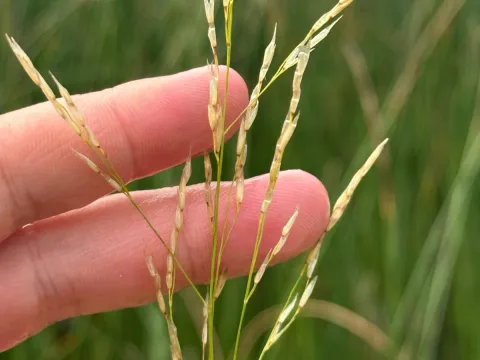
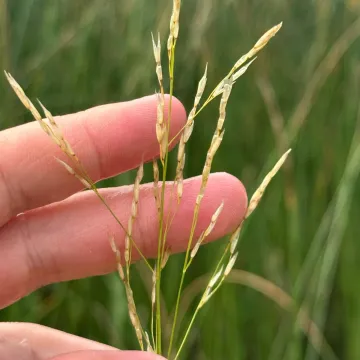
Botanically, rivergrass is a robust plant growing up to 150 cm tall. It features an extensive underground rhizome system that allows for rapid spreading and bank stabilization. The leaves are flat and elongated, while the inflorescence is a large, spreading panicle that produces viable seeds, although vegetative propagation remains the primary mode of expansion in established stands.
Cultivation requirements focus on moisture and soil fertility. Scolochloa festucacea thrives in silty and peaty soils rich in nutrients. It requires periodic water saturation to outcompete other meadow species. Agronomic management involves timely harvesting before the grass matures, as the stems become lignified and lose their nutritional value for livestock quickly after the flowering stage.
- Excellent tolerance to prolonged deep flooding.
- Superior biomass production in wetlands.
- Effective soil erosion control on riverbanks.
- High nutritional quality for cattle when harvested early.
- Natural resilience against many soil-borne diseases.
The primary economic use of rivergrass is as forage. It is utilized for grazing, haymaking, or silage, particularly in areas where water levels fluctuate significantly. Beyond its feed value, it plays a vital role in wetland restoration and the reclamation of flooded pasture lands. While generally resilient, farmers should monitor for common rust diseases during seasons with high humidity and limited air circulation.
Photo gallery