Narrow-leaved vipergrass
Scorzonera angustifolia
Description
Narrow-leaved vipergrass (Scorzonera angustifolia) is a perennial herbaceous plant belonging to the Asteraceae family. While less common than the widely cultivated Scorzonera hispanica, this species possesses distinct morphological traits, including narrower leaves and an evolutionary adaptation to arid environments.
The plant originates from the Mediterranean basin and mountainous regions of Europe. It thrives in well-drained, rocky, and calciferous soils. Its natural distribution demonstrates an evolutionary preference for sunny, exposed sites, which defines its basic ecological requirements when introduced into agricultural practices.
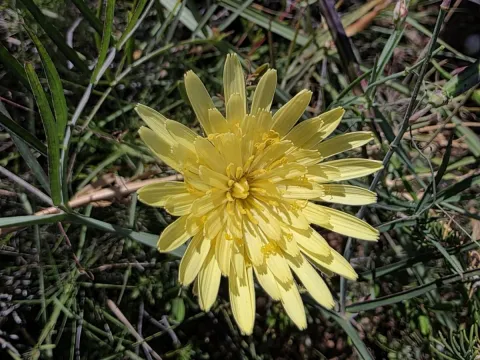
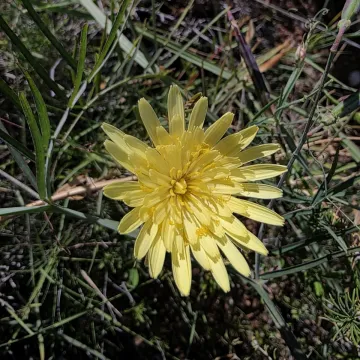
Botanically, the plant features a deep taproot, which is the primary organ of interest. The foliage forms a basal rosette with narrow, elongated leaves. During the flowering stage, the plant produces bright yellow flower heads. The root system is significantly developed, allowing the plant to sustain itself during dry spells, which is a major advantage for sustainable farming.
Agronomic requirements for this crop include deep, loose soil that prevents the deformation of the taproot. It requires full sunlight to ensure proper growth and sugar accumulation in the roots. Proper soil aeration is crucial to prevent root rot. Seeds should be sown in early spring, and thinning is necessary to provide enough space for individual root development.
The main uses of this crop are culinary, as the roots are rich in inulin and other valuable dietary fibers. In terms of protection, the crop is susceptible to common root diseases such as white rot and pests like aphids. Management strategies should prioritize good drainage and moderate watering to minimize fungal risks in the root zone.
Photo gallery