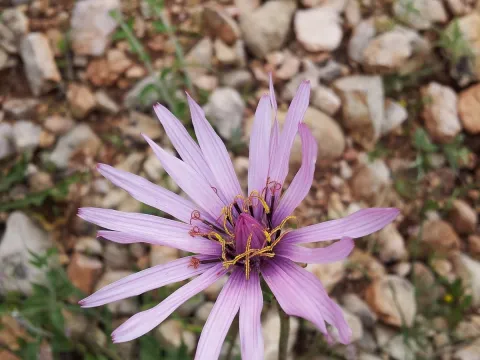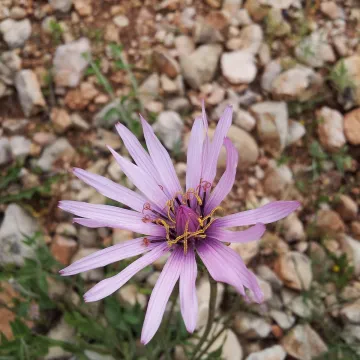
Scorzonera papposa
Scorzonera papposa
Description
Scorzonera papposa is a perennial herbaceous plant belonging to the Asteraceae family. As a niche agricultural crop, it is valued for its edible taproots, which are similar in nature to those of the more common black salsify. This plant serves as an interesting subject for both culinary and botanical research due to its specialized adaptations.
The species originates from the arid and semi-arid regions of Western and Central Asia. Its natural range includes steppe zones and rocky foothills, reflecting its evolution in environments characterized by long periods of drought and nutrient-poor, rocky soils. These conditions have shaped the plant into a highly resilient and hardy agricultural candidate.
Botanically, Scorzonera papposa is characterized by a thick, fleshy taproot that functions as a storage organ for inulin and carbohydrates. The plant features a rosette of lanceolate leaves and produces yellow, ray-floret flower heads typical of the family. The specific epithet "papposa" refers to the prominent pappus attached to the seeds, which facilitates wind dispersal in its native habitat.
Agricultural success with this crop requires loose, deep, and well-drained soils to prevent root deformity. It is particularly sensitive to waterlogging, which often leads to root decay. Best practices for cultivation involve minimal nitrogen fertilization, early thinning to ensure adequate root spacing, and diligent weed control during the seedling stage to prevent competition.
- Resistant to cold weather but requires protection from excessive soil moisture.
- Deep tillage is essential for optimal harvest quality.
- Susceptible to soil-borne pathogens and root rot in heavy clay soils.
- Common pests include wireworms and aphids that affect early foliage.
The primary economic and household use of Scorzonera papposa is as a dietary root vegetable. Its roots are typically consumed cooked, providing a source of complex carbohydrates and minerals. Given the growing interest in ancient and drought-tolerant grains and vegetables, this species holds potential for further development in sustainable and low-input farming systems.
Photo gallery