Mountain hawkbit
Scorzoneroides montana
Description
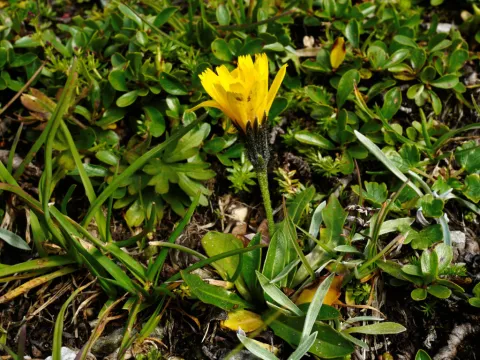
Mountain hawkbit (Scorzoneroides montana) is a perennial herbaceous plant belonging to the Asteraceae family. Previously classified under the genus Leontodon, this species is a hallmark of alpine ecosystems. It represents a specialized type of flora evolved to thrive in high-altitude environments characterized by limited heat and nutrient availability.
The plant is native to the mountain ranges of Europe, primarily distributed within the Alpine region. Its natural habitat includes rocky slopes, meadows, and subalpine pastures. The evolutionary development of Scorzoneroides montana has focused on survival in thin, acidic soils and extreme temperature fluctuations, making it a highly resilient species in its native range.
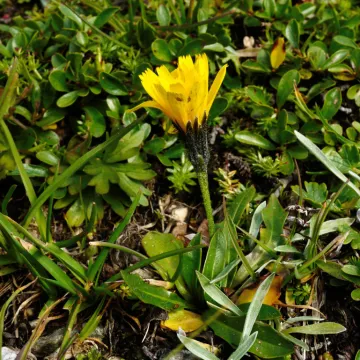
Botanically, the species is distinguished by its basal rosette of oblong to lanceolate leaves and leafless flower stalks. The bright yellow inflorescences are typical of the tribe Cichorieae. The plant possesses a deep taproot, which allows it to access water and stabilize itself in moving mountain scree, while the seeds are dispersed via a pappus, facilitating colonization of new patches.
Cultivation of Scorzoneroides montana requires strict adherence to environmental conditions resembling its high-altitude habitat. The plant demands excellent drainage, as waterlogged soil is fatal to its root system. Ideal growing media are gritty, well-aerated, and nutrient-poor, reflecting the low-fertility soils of the Alps where it naturally flourishes.
- Requires full sun exposure for optimal development.
- Thrives in acidic or neutral pH substrate conditions.
- Highly sensitive to excessive nitrogen fertilizers.
- Excellent cold hardiness even in harsh winters.
While not a major commercial crop, the species has significant potential in rock garden cultivation and as a genetic reservoir for breeding cold-resistant varieties. Pests are relatively uncommon in natural alpine settings, but root rot pathogens can emerge under artificial conditions if drainage is compromised. Careful management of site selection remains the most critical factor for successful cultivation.
Photo gallery