Lesser skullcap
Scutellaria minor
Description
Lesser skullcap is a perennial herbaceous plant belonging to the Lamiaceae family. Often overlooked due to its small stature, this species is highly valued in botanical circles for its unique morphological features and its role as a specialized plant in temperate ecosystems.
The plant originates primarily from Western and Southern Europe, where it thrives in damp habitats. Its natural range includes boggy meadows, heathlands, and margins of wetlands. To successfully cultivate this species, growers must provide an environment that replicates these moisture-rich, acidic soil conditions.
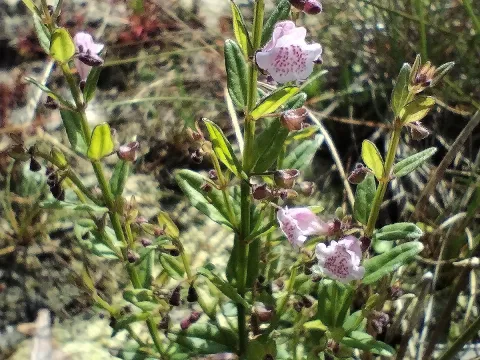
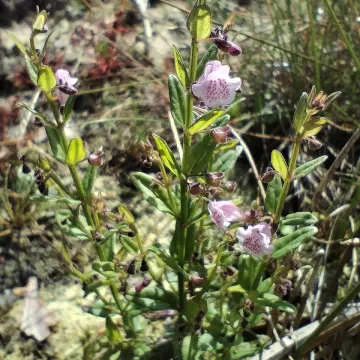
Botanically, Scutellaria minor features slender, creeping or ascending stems that rarely exceed 20 centimeters in height. The foliage is small and opposite, and the flowers are distinctively shaped like helmets, characteristic of the genus. These flowers, usually blue or violet, appear during the warmer months and attract various pollinators.
Agronomic requirements are focused on moisture management and soil chemistry. The species is highly sensitive to desiccation and requires moist, peaty, or sandy soils with an acidic pH. It performs best in partial shade, as intense sunlight often leads to soil water loss. Propagation can be achieved through seed sowing or careful rhizome division.
The economic and practical use of lesser skullcap involves both the pharmaceutical industry and landscape horticulture. Historically, it has been harvested for its mild sedative and anti-inflammatory properties. In gardening, it is an excellent choice for damp borders or rock gardens, serving as a durable and aesthetically pleasing ground cover.
- Strict requirement for soil moisture.
- Preference for acidic soil conditions.
- Tolerance for partial shade.
- Medicinal potential of plant secondary metabolites.
Photo gallery