Scybalium jamaicense
Scybalium jamaicense
Description
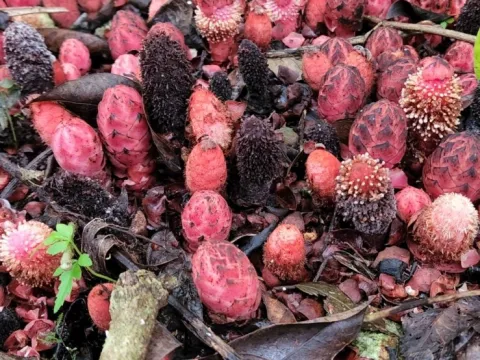
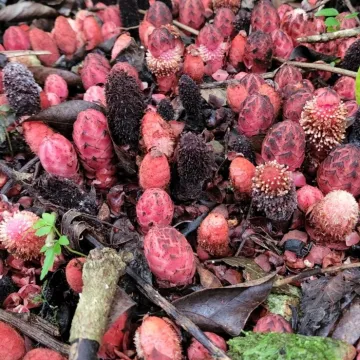
Scybalium jamaicense is a distinct parasitic plant belonging to the Balanophoraceae family. Unlike conventional agricultural crops, it is an achlorophyllous organism, meaning it lacks the ability to photosynthesize. Instead, it relies entirely on its host plant to obtain the water and nutrients required for its survival and reproduction.
The native range of this plant includes the Caribbean islands, most notably Jamaica, as well as parts of Central and South America. It thrives in humid tropical forest environments where it integrates into the root systems of specific host trees. Because of this specialized ecological niche, it does not exist as a cultivated crop in any farming system.
Botanically, the plant is characterized by a fleshy stem that emerges from the ground, often resembling a fungal fruiting body. The stem is covered in small scale-like leaves, culminating in a dense inflorescence composed of numerous tiny flowers. These structures are specifically adapted to attract specialized forest pollinators while remaining protected within the dense leaf litter.
Its environmental requirements are strictly dictated by the health of the host species and the stability of the tropical forest climate. High humidity levels, shade, and rich organic substrate are critical for the plant to successfully develop its haustorial connections to the host roots. Any disruption in the forest microclimate can lead to the decline of the local population.
The plant has no commercial or agricultural utility, and therefore, no standard agronomic practices are applied to its cultivation. Its existence is largely confined to wild habitats, where it plays a minor role in the local ecosystem. There are no known pests or diseases associated with this plant, as its survival is intrinsically linked to the health of its host environment.
Photo gallery