
Forest rye
Secale sylvestre
Description
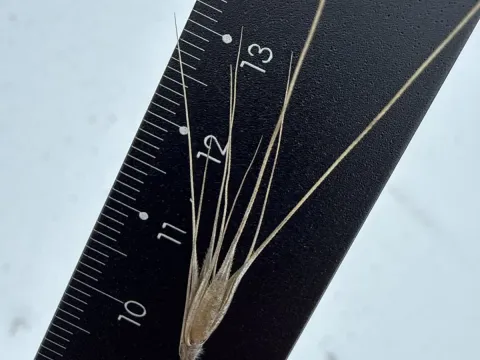
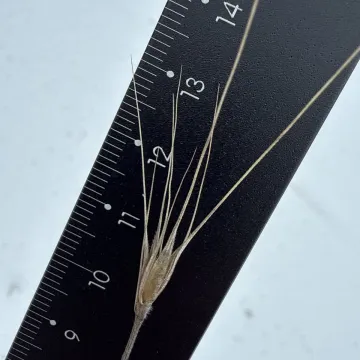
Forest rye (lat. Secale sylvestre) is an annual herbaceous plant belonging to the grass family (Poaceae). Unlike cultivated rye, this species grows in the wild and is known for its remarkable ecological resilience. It serves as an important genetic reservoir and is increasingly recognized for its functional roles in environmental conservation and soil management.
The native range of Secale sylvestre spans across the steppe and semi-desert zones of Eurasia, including regions of Eastern Europe, the Caucasus, and Central Asia. It thrives in open environments with well-drained, sandy soils. This species is often found in disturbed habitats, sand dunes, and dry slopes, demonstrating its capacity to colonize areas where environmental stress limits other flora.
Botanically, forest rye is a slender grass typically reaching heights of 20 to 60 centimeters. It features narrow, rough-textured leaves and a compact, brittle spike that fractures upon maturity to disperse seeds effectively. The root system is relatively extensive for such a small plant, providing excellent stability and water uptake capability in arid substrates.
Regarding climate and soil requirements, forest rye is highly undemanding. It displays excellent drought tolerance and is capable of surviving harsh winter conditions. In terms of cultivation, it requires full sun exposure and minimal soil nitrogen. For erosion control projects, seeds are usually sown in the autumn, allowing the plant to establish early in the spring season when moisture is available.
The primary agricultural and environmental use of forest rye is in phytoremediation and soil stabilization. It acts as an effective ground cover to prevent wind and water erosion on sandy terrain. While robust, it can be susceptible to common cereal pathogens such as rust fungi and powdery mildew during humid periods. Pests typically include various grain-feeding insects common to wild grass ecosystems.
- Exceptional drought resistance.
- Effective for sand dune stabilization.
- High germination energy.
- Minimal input requirements.
- Valuable resource for agricultural research.
Photo gallery